
Blog
Travel Health Kit Essentials – What to Pack to Stay Healthy While Traveling

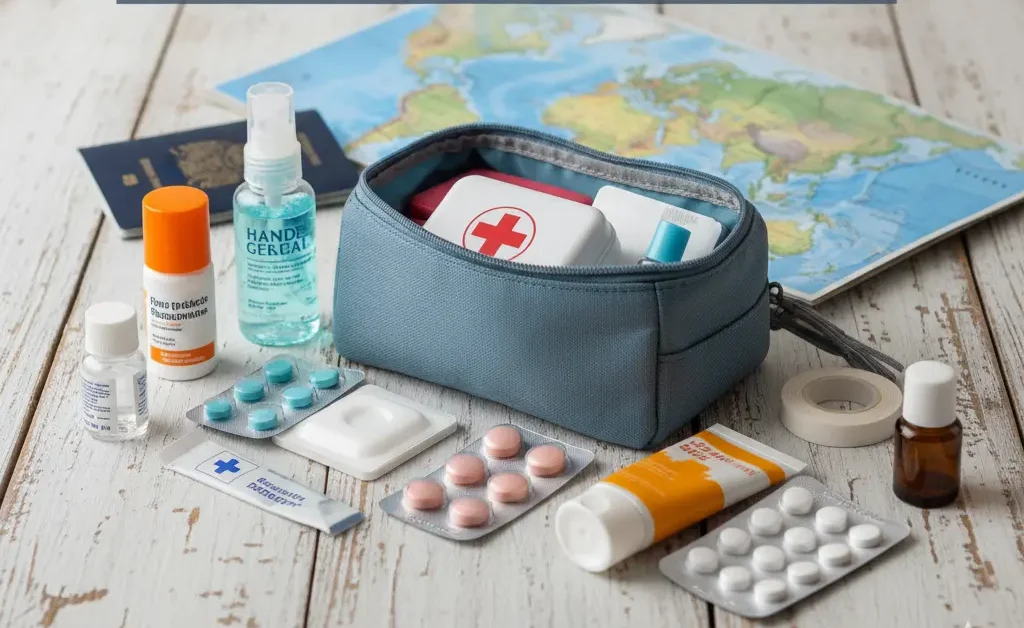
Being ill or injured on vacation is not only inconvenient, but it can also make your entire vacation bad. Be it sudden fever, a scraped knee or food poisoning, lack of preparation can easily transform a minor issue into a huge one within minutes.
Being honest, sometimes you cannot find medical care when you are not at home. At times, even simple commodities such as pain relievers or bandages can be difficult to find or not what you are accustomed to. A carefully included travel medicine kit can save you a lot of time, money and stress, as the necessary supplies are always close at hand, right in your bag.
This is why you should include travel health kit essentials at the top of your checklist:
- Health risks related to travelling are not as rare as you may believe. Stomach bugs, cuts, insect bites, and allergies are new things that travel puts your body through.
- Treatment in foreign countries may be inaccessible. In rural or third-world countries, it can take hours (or days) to visit a doctor. Language and cost may be an issue even in cities.
- People do not treat small problems. The infection can happen in a small blister. Diarrhea may cause life-threatening dehydration. With a kit, then you can treat it and it does not get worse.
- It gives peace of mind. It is nice to know that, whatever life throws your way, you are prepared to handle it, be it on a backpacking trip, flying with kids or a cruise.
Personally, I once had a painful ear infection halfway into a trip to Thailand. It took a whole day to find eardrops, by which time it had gotten worse. Had I brought the necessities of my travel health kit, I would have saved days of misery and an appointment at a doctor’s office in a different language.
Carrying your own travel medicine kit is not only a smart thing to do, but also a part of being safe and healthy when traveling. It is some of these simple yet effective healthy travel tips that can make the difference.
Core Categories of a Travel Health Kit
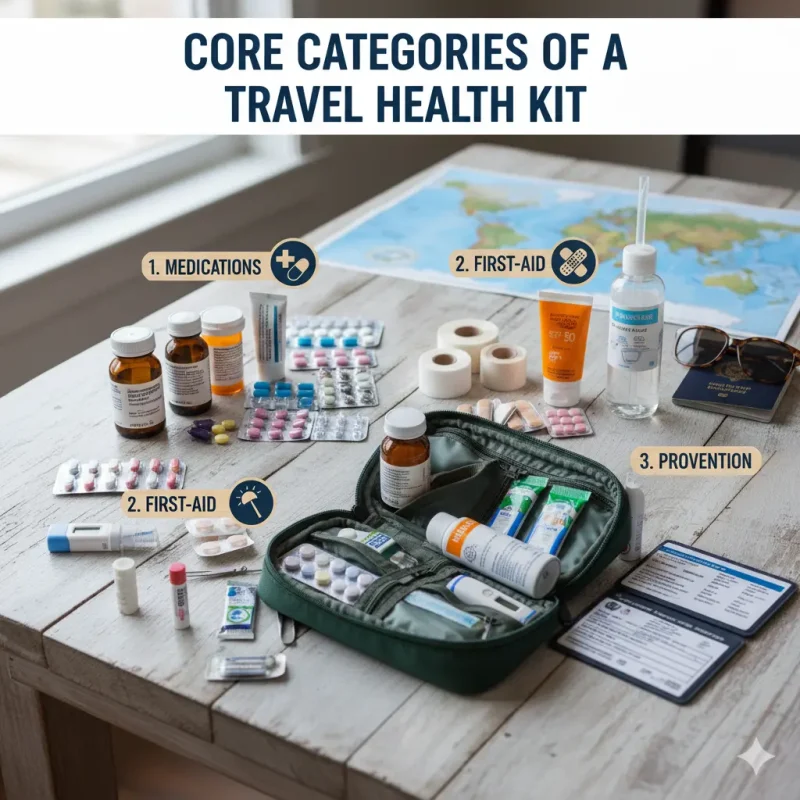
A smarter travel health kit does not have to be large; it just has to be well organized. Having items grouped into easy-to-pack categories makes it very easy to pack (and locate later on). The following is a rough breakdown of the key groups to include:
First Aid Supplies: To treat minor injuries such as a cut, blister and sprain. Imagine bandages, antiseptic wipes, gauze and tweezers.
Prescription Drugs: all drugs you regularly take as well as back-ups in case of delays. Be sure to add extra things such as inhalers or allergy treatment.
Over-the-Counter Drugs: Analgesics, anti-diarrheals, cold medicine, antihistamine pills – for common travel ills that strike out of the blue.
Personal Hygiene & Sanitation: Sanitizers, wiping paper, tissues and feminine items to keep you clean and comfortable on the road.
Prevention Health Kits: Sunscreen, insecticide, purification tablets, face mask — to avoid trouble in the first place.
Emergency Documentation: Prescriptions and medical information, insurance information – everything in one place in case you require assistance in a hurry.
These six categories are about as close to everything you will need to feel ready as the location you are going to.
First Aid Supplies to Handle Minor Injuries
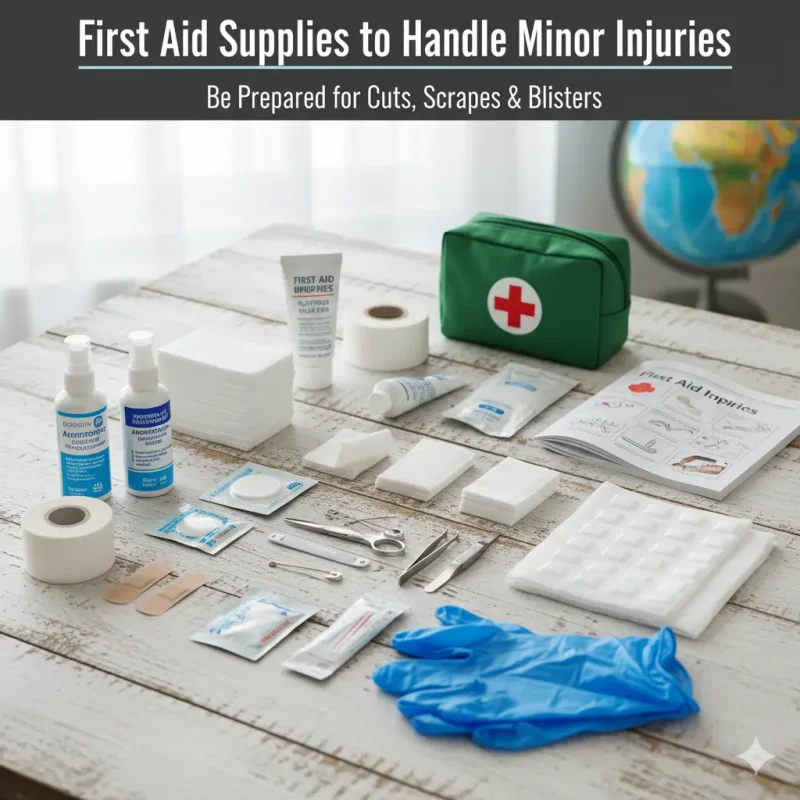
Any small accident can disrupt your day when you are going somewhere. This is why the first aid should always be the first point on the list of the recommended travel health kit essentials. Stock up on a variety of adhesive bandages of various sizes to use on cuts and scrapes and on gauze pads and elastic bandages to cover a wound or provide support to a twisted ankle. Antiseptic wipes or miniature bottles of antiseptic solution will aid in cleaning minor injuries immediately.
Use medical tape, blister pads and moleskin or molefoam to treat hot spots or prevent blisters – particularly when you are going to be walking a lot. A small pair of scissors, tweezers and disposable gloves come in handy on more occasions than you would imagine. These are the basic first aid items that form the core of any smart kit and provide you with a short-term solution when you need it the most.
Prescription Medications to Add to Your Kit.
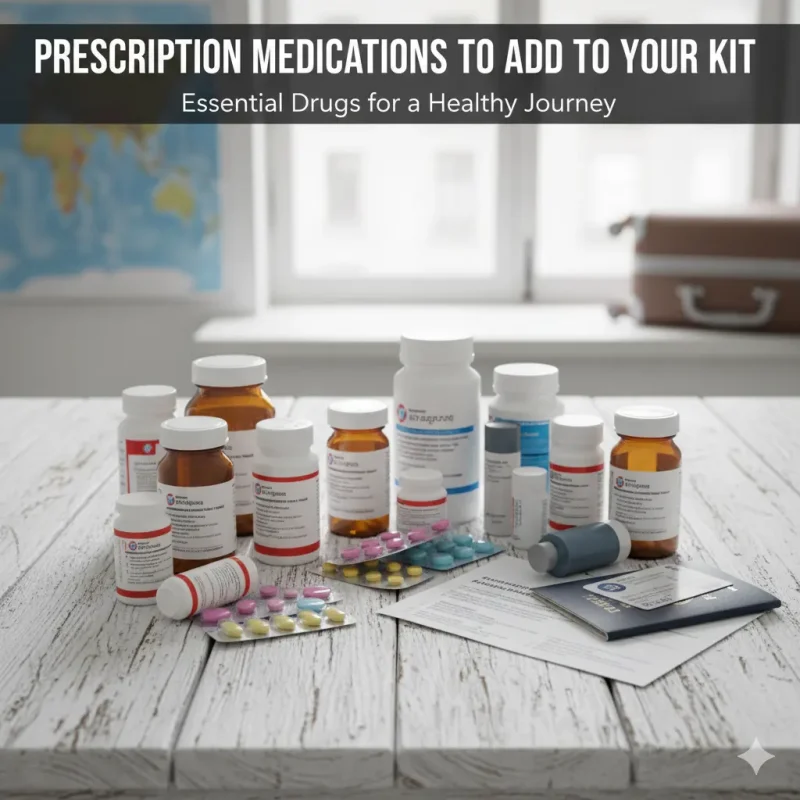
In case you have any daily medicine at home, be sure not to leave it out of your travel health kit essentials. Be sure to carry them in their labeled containers on the side, always with a copy of a prescription, just in case. Even if you hardly use it, an epinephrine auto-injector is a must to those with severe allergies.
When you are going to places where malaria occurs, carry antimalarial drugs such as doxycycline or atovaquone-proguanil. In high altitudes, acetazolamide may assist you in acclimatizing and breathing more easily. Other essential medications such as inhalers, insulin, or even psychiatric medications such as diazepam or olanzapine, should not be forgotten, should you require them. You should have a doctor note or documentation in case your treatment requires needles or syringes. Better safe than stuck.
Over-the-counter drugs for common travel illnesses.
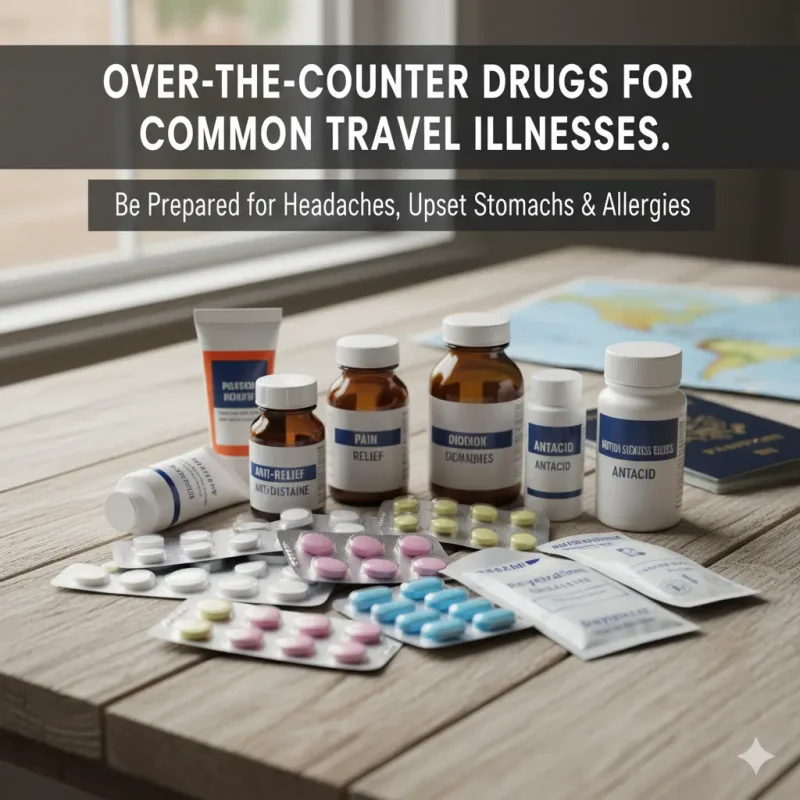
Not all health problems require the services of a physician; they simply require the right pills at the right time. That is why a good set of over-the-counter drugs should also be included in your list of travel health kit essentials. Always have some pain reliever such as acetaminophen, ibuprofen or aspirin to take care of everything from headache to muscle pains.
Upset stomach? Pack loperamide or bismuth subsalicylate to treat diarrhea and don’t forget oral rehydration salts or electrolyte powder to keep hydrated. Antihistamines are also good with allergies and motion sickness pills such as meclizine or dimenhydrinate are great on the road or aboard. Cold, cough and flu pills (such as decongestants or expectorants), antacids and mild laxatives complete a powerful working kit of daily problems.
Preventive Health Essentials
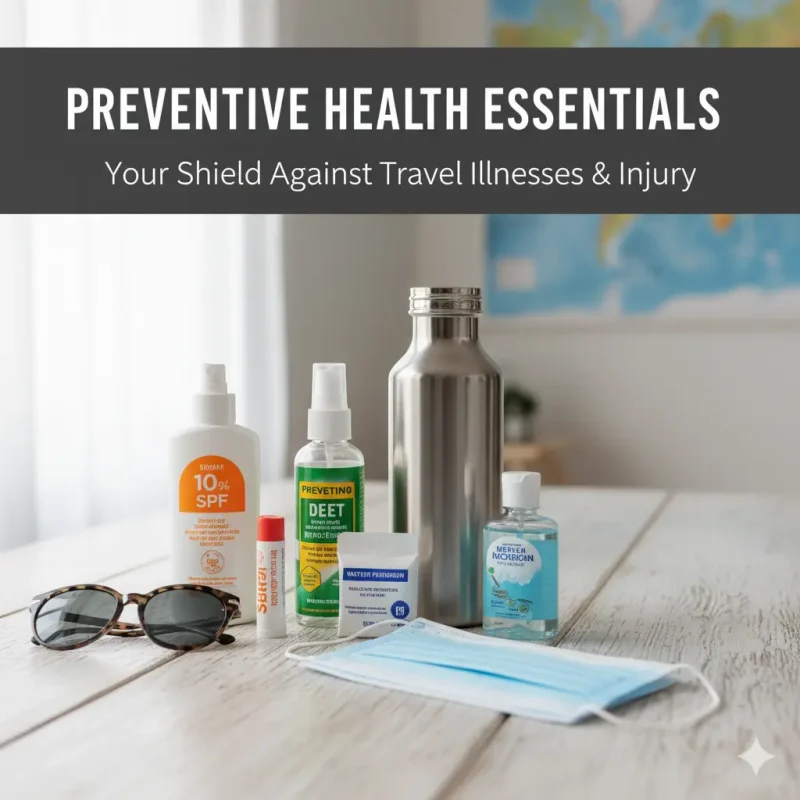
The best medicine is sometimes not to get sick at all. Preventative devices are good at that. An insect repellent that contains DEET, picaridin or oil of lemon eucalyptus is a good safeguard against bug bites and other infections such as dengue or malaria. Forget to put on sunscreen, SPF 30 is best, zinc oxide cream provides additional protection to the skin.
Your lips should be taken care of, as well, so grab a lip balm with SPF. In a crowded or dusty area, face masks (particularly N95s) are helpful, and condoms or barrier contraceptives make sense to protect oneself. Travelling to a tropical or remote destination? Pack a net to protect against mosquito bites, perhaps some permethrin-impregnated clothing and water purification pills or filters to ensure your drinking water is safe.
Personal Hygiene and Sanitation Items.
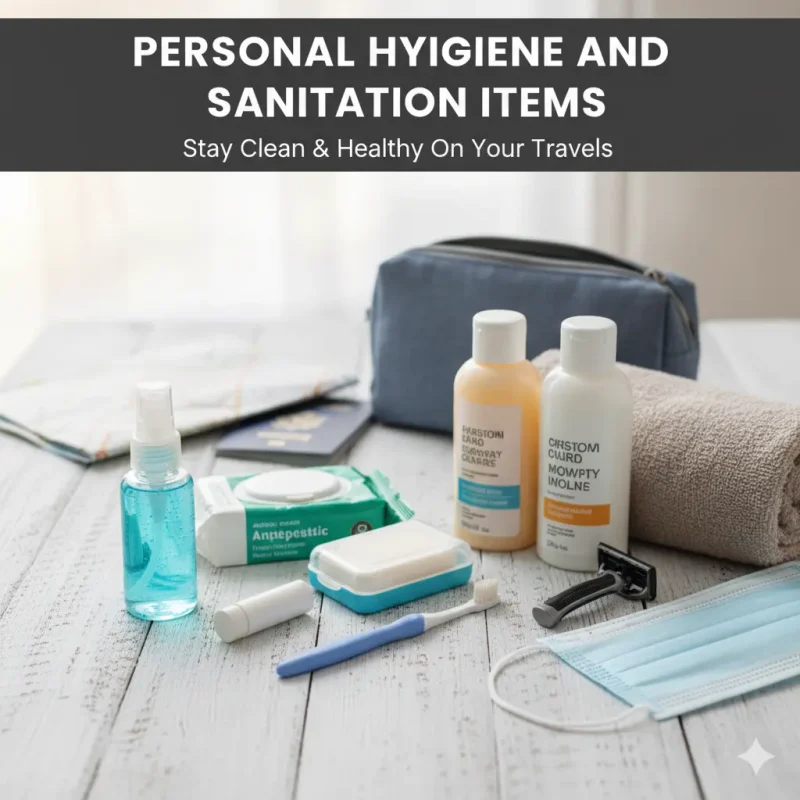
It may not be easy to keep things clean when traveling but it can help you avoid getting sick in the first place. Bring hand sanitizer with an alcohol concentration of at least 60 percent and disinfecting wipes to use on common surfaces. Wet wipes and facial tissues are necessities when doing quick cleanups or when there is no toilet paper available.
Feminine hygiene items like pads, tampons, or a menstrual cup are something not to be forgotten as you may not be able to find what you need in a foreign country. Travel soap sheets and a small towel occupy a small space but can prove useful particularly during long travelling days or in camping.
Emergency and Travel Health Documentation.
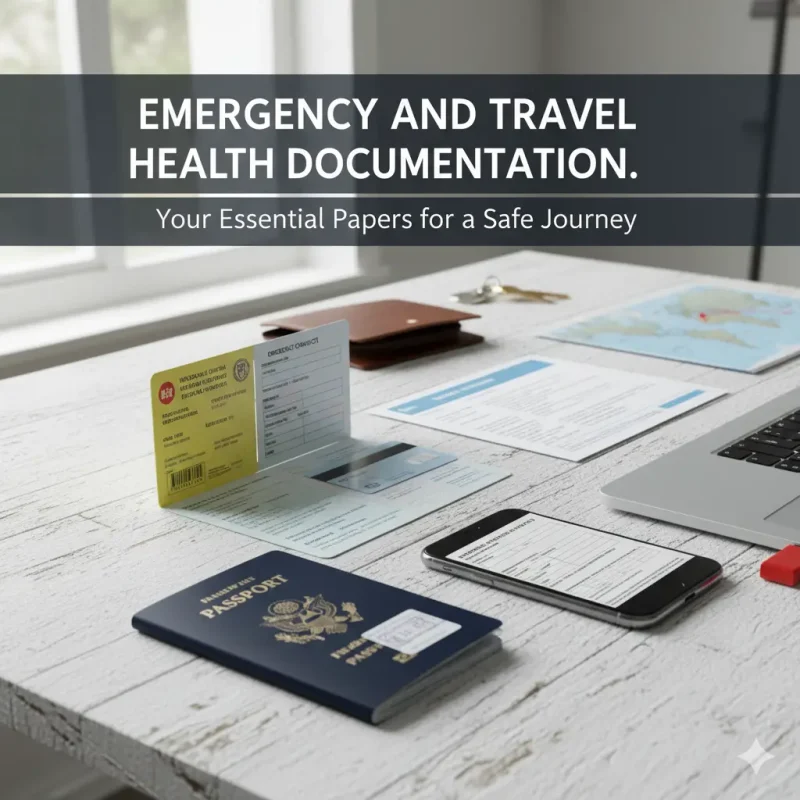
The world and all her gear will not help you when you are unable to communicate your needs in an emergency. That is the reason why this latter group is not less important than the others. Carry an International Certificate of Vaccination (such as the Yellow Card) in case you need one for your destination. Copy your travel insurance and medical insurance and emergency contacts.
Carry a small card of your allergies and medical conditions and copies of your prescriptions. Also have an ID and (when feasible) a blood type card. Put it all in a waterproof pouch and carry it around, not in checked baggage. It can sound excessive, but in case of any issue, this small folder can make the process of receiving assistance much faster and save you hours of work-related stress.
Checklist: Travel Health Kit Essentials at a Glance
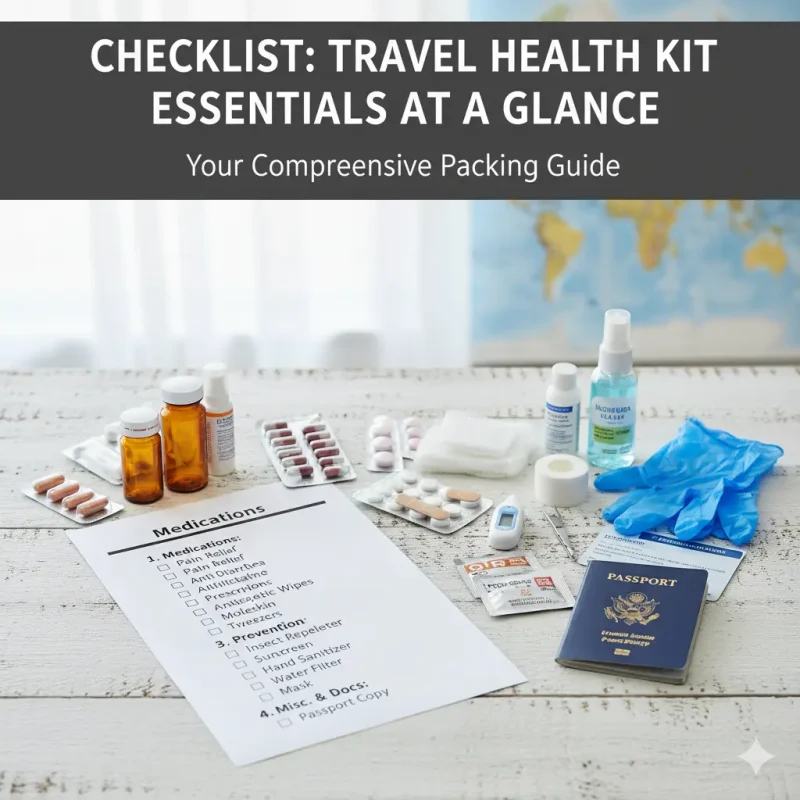
A checklist can help you pack your travel health kit with ease and without stress. The following is a brief list of the types and priority; therefore, you can pick one and get what you need without doubting yourself.
Start with a basic first aid kit including bandages, antiseptic cleansers and pain killers. Include your prescription medications and copies of prescriptions and any emergency drugs. Also, don’t leave out over-the-counter medicine against common ailments, such as allergies, upset stomach, and motion sickness.
Keep personal hygiene items like hand sanitizer and wipes and feminine products clean. Carry preventive measures such as sunscreen, insect repellent and water purification pills to prevent problems even before they occur. Finally, make sure that you have your emergency papers ready in a waterproof pouch.
You can print this checklist or save it on your phone: it is better to have it ready before each trip, and you will not miss anything and will be able to travel without any problems.
Frequently Asked Questions (FAQs)
A travel first aid kit will contain bandages, antiseptic wipes, gauze pads, medical tape, tweezers, scissors and blister care products. Personal medications and pain relievers are also a good idea.
Yep, prescription drugs can be packed in carry-on bags. They should be left in their original marked containers and to be on the safe side, you should bring a copy of your prescription or a doctor's note.
Apply a cool pack/insulated bag intended to store medication. Do not freeze medicine and look into airline regulations on how to bring them. Carry them with you in your carry-on and keep them cool.
Although this is not always necessary, a doctor's note or prescription related to some medical equipment or medication can facilitate the security check and prevent misunderstandings.
You may carry the quantity you require for your trip, and have no less than a sensible additional supply. Store all the medicines in their containers to facilitate the security checks.
Short-bladed scissors that have a blade length of less than 4 inches can typically be carried in the carry-on baggage, although airline and country rules differ. It is better to be safe and not sorry, so if you are not sure, ask your airline to verify whether you can pack certain sharp tools in checked luggage.
