
Blog
Top Reduce Luggage Weight Tips: Travel Light & Pack Smart

You should not feel like you are transporting an entire wardrobe when you want to pack for a trip. Don’t worry, you have not been the only one whose bag is always overweight or just about to rip open because of everything you had to cram into it. I have also been there, and I hope you understand what I mean when your suitcase balances slightly on the weight scale hoping that it will not reach the limit. That is why I compiled my best reduce luggage weight tips that work and are easy to implement. We will go through everything you need to know on how you can travel with less stress by planning smart light-packing strategies as well as cute travel weight hacks. Traveling by plane or car, it is worth considering how to lighten the load, make room and simplify the packing process.
Why Reducing Luggage Weight Matters
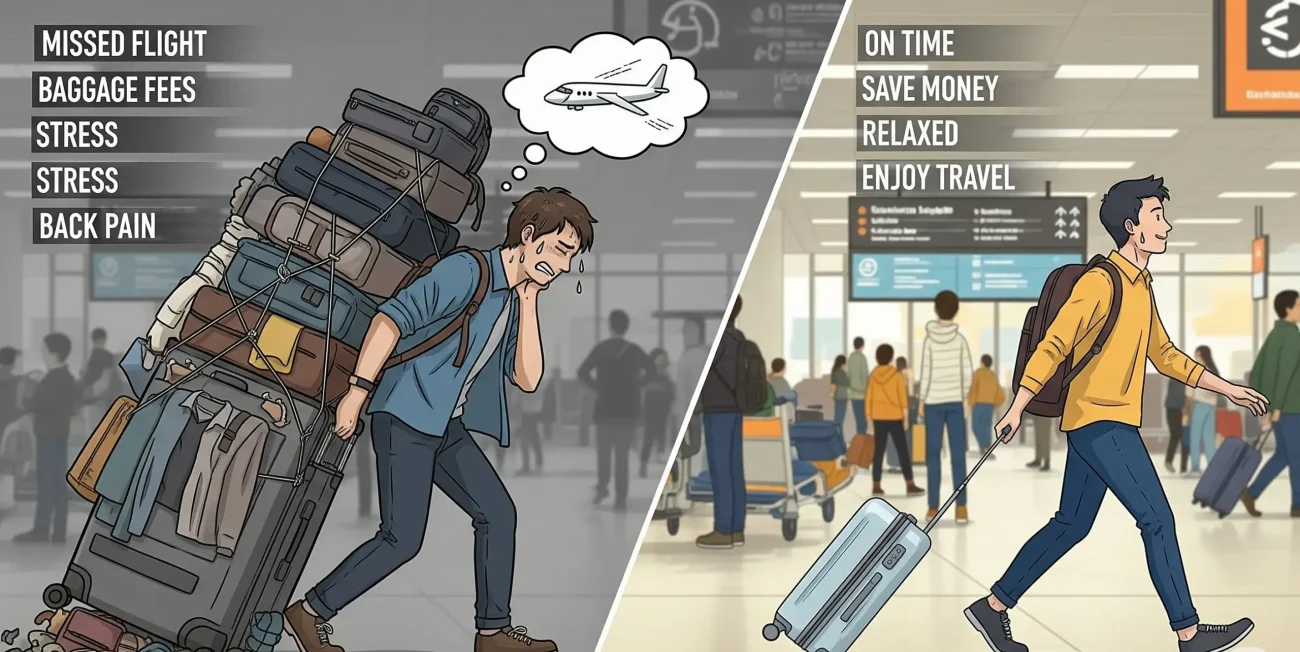
There is no fun in carting around a heavy suitcase. Traveling long-distance or taking a weekend trip by car, the less weight you carry with you in your luggage, the easier your trip will go.
One, there is the money. Airlines usually charge extra to transport overweight luggage, and, adding up quickly, this may cost up to 100 dollars or more just to move a few pounds. That is followed by the inconvenience of it. Bulky luggage is more complicated to carry, to carry in overhead vehicle compartments and a nightmare to pull across long airport complexes or uneven pavements.
However, it is not only convenient: Traveling light also implies reduced risk of being injured, no pulled back muscles after dragging your luggage or no unhappy shoulders with extra weight you carry. The lighter bags are also environmentally friendly. The heavier a plane is, the more fuel it burns up, and thus it is possible that carrying less can leave a smaller carbon footprint.
Packing light has the entire experience of flying hassle-free, especially when one begins to unpack. It also gives me a greater degree of flexibility in travelling. Have you ever had to dash through an airport in order to make a connection? You’ll appreciate packing less.
According to the U.S. Department of Transportation, many airlines impose overweight baggage fees starting at 50 pounds. Additionally, the National Institute for Occupational Safety and Health warns that carrying heavy luggage increases the risk of injuries.
And don’t just start tossing more bags into your suitcase before you learn what you can really accomplish by sticking to a lighter suitcase and what you have to drop (the stress, the fees, the heavy packs on your shoulders).
Understand Airline Baggage Weight Limits
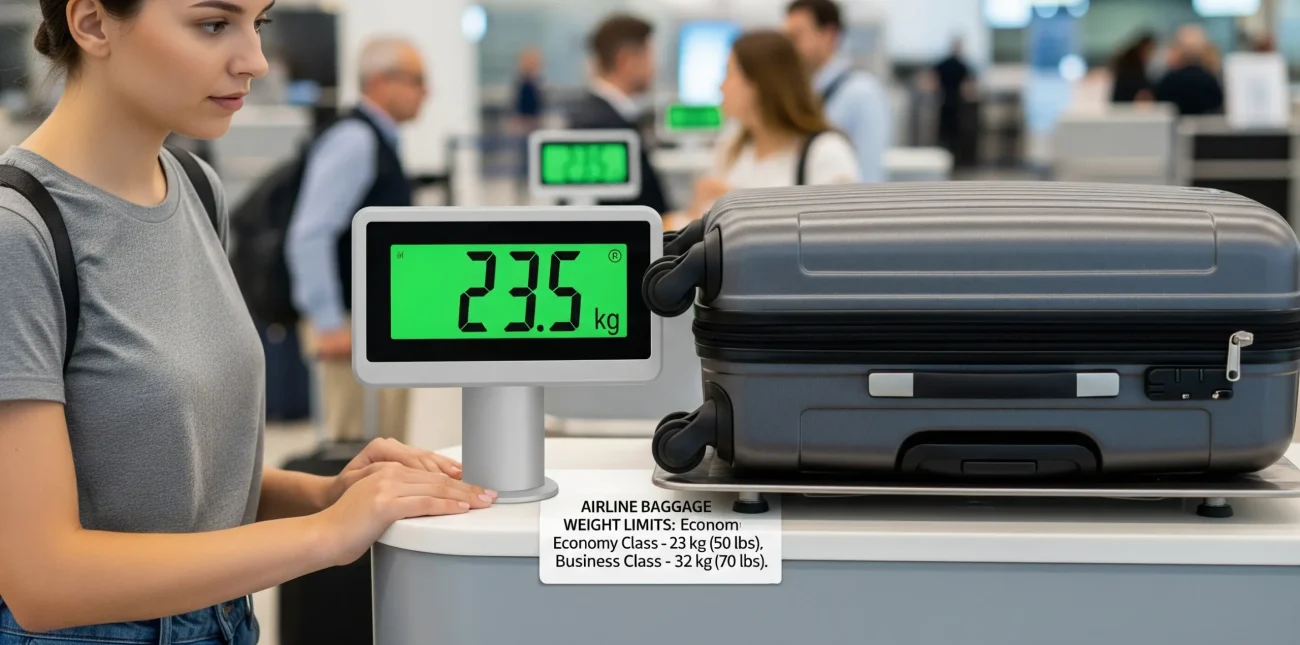
Before you unzip your suitcase, you need to check the airline baggage weight regulations. The U.S. airline has a limit of 50 pounds of checked baggage, with carry-ons providing smaller luggage that can fit into the overhead compartment with dimensions of 22 pounds. A small personal carrier (such as a backpack or purse) is put under the seat.
Be over the limit? This costs you 75 to 200 dollars per bag, depending on the route and airline you are using.
I once was charged 100 dollars at the airport simply because I was 3 pounds above the limit and I never got away with it. It is also important to weigh your bag at home because you need to know what the policy of a particular airline suggests.
“According to the Transportation Security Administration (TSA), lighter luggage improves passenger safety and speeds up security screening.”
Plan Before You Pack: Visual Inventory & Checklist Strategy
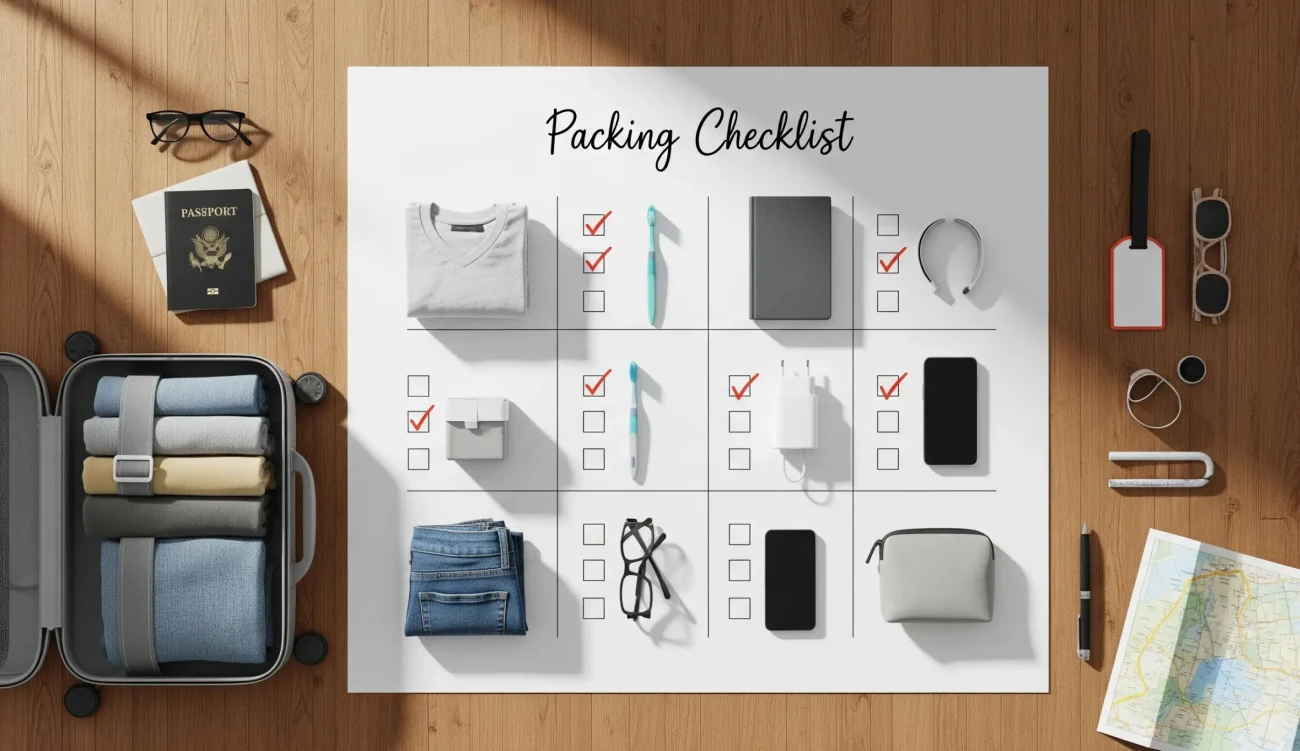
Before throwing anything in your suitcase, put it all on the floor. It is easier to see everything at one glance, an instant inventory which allows you to identify doubles or large items or anything you simply don’t really need. With this one simple step, you can reduce your packing volume by up to 30%.
Apply a packing checklist. It will help you to be on track and you will never be in a last-minute panic mode making sure you pack this and that. Research indicates that individuals who use checklists have a 30 percent chance of not missing out on what is necessary.
Lastly, do a sanity check of your bags before you zip. There is always something I can leave behind.
“Research published by the American Psychological Association highlights that checklist use reduces packing errors and stress.”
Choose the Right Luggage: Light, Durable & Compact
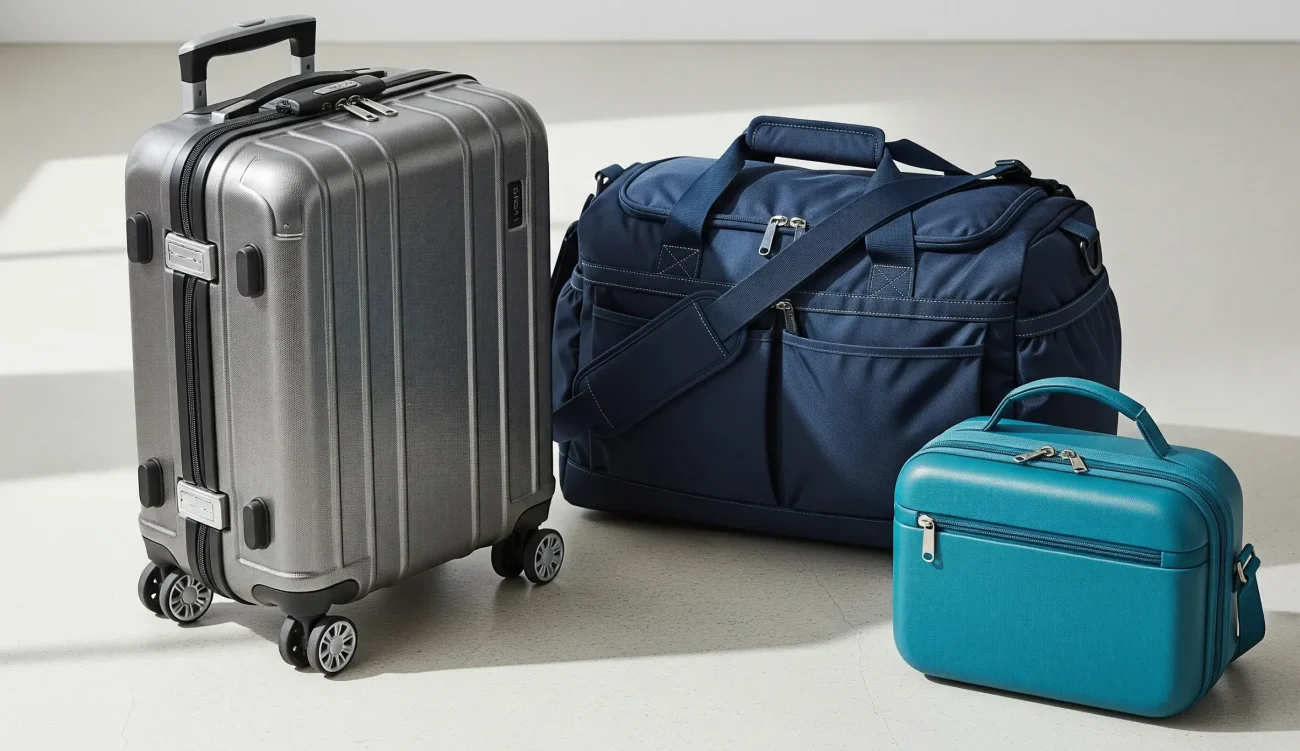
In case you have forgotten it is okay, but your suitcase does not. A bulky, burdensome bag will gobble up your baggage limit before you even start putting stuff in it. This is why it is one of the most effective ways to pack: choosing a light, durable, compact suitcase.
Polycarbonate or hard-shell cases should be made of polycarbonate, and if soft-sided, of ripstop nylon. These are high-powered yet very lightweight. I personally like soft-side luggage with the flexibility on the handling part; hard-side suitcases can protect a little bit more delicate items.
The fancier wheels (what we call spinner wheels) serve to make transport in and around airports much simpler, and there are also great compartments built in that can help to keep things organized, making them also lighter by design.
“Research by the FAA indicates that every extra pound on an aircraft increases fuel burn and carbon emissions.”
Plan Before You Pack: Visual Inventory & Checklist Strategy
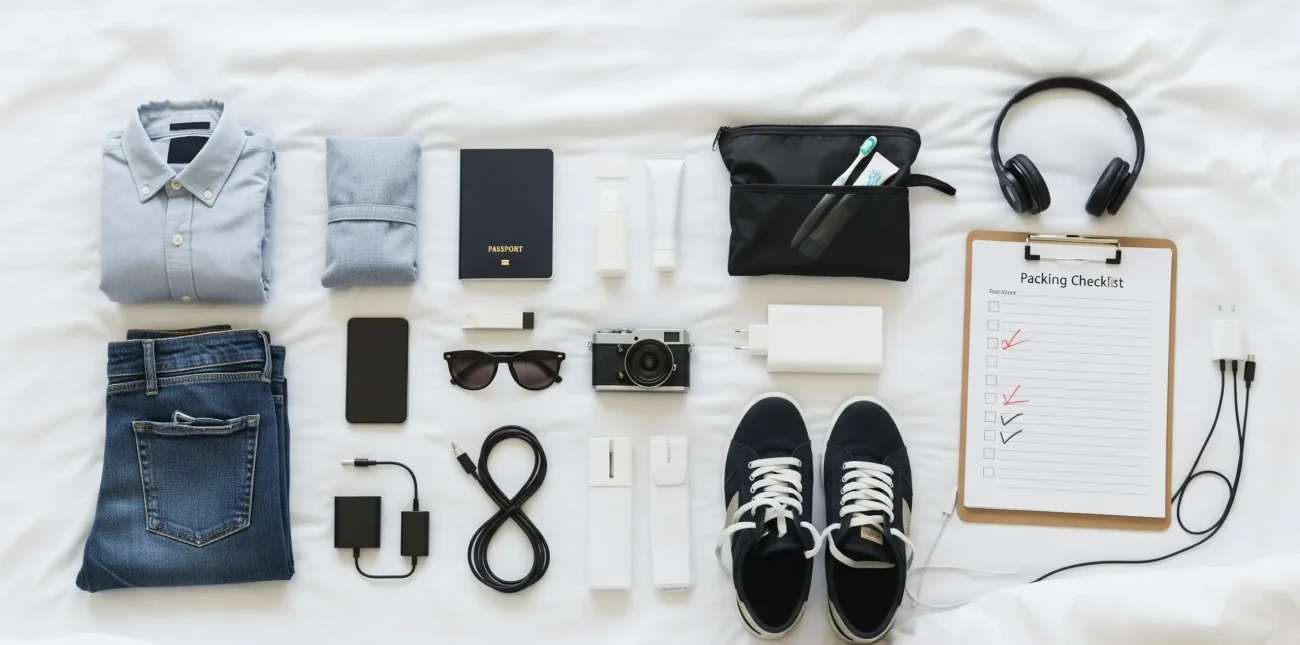
Lay out all travel items before packing to have a visual inventory. This is an easy trick that will enable you to identify what is not necessary or too bulky so that you can reduce the size of your luggage by up to 30 percent. It is amazing to realise how a lot of extra weight is hidden in duplicates or places where you will never use them.
Make a packing list based on your trip. A checklist will minimize the likelihood of you missing some important things, which is no longer associated with last-minute stress.
Lastly, conduct a last-minute baggage check-up just before you close your bag. I am always trying to carry things I can get rid of and save weight and space.
Build a Capsule Wardrobe: Clothing that Multiplies Outfits

This does not mean that you pack many clothes so that you have a wide range to choose from. Instead, see if you can do a capsule wardrobe- a small collection of multi-use clothes that can be combined and worn in any way. As in the example (2 pairs of pants and 2 tops), they can be used to create 6 different outfits.
Go with neutral colors such as black, white, gray, or navy so that everything goes with everything. The idea of layering is important too and this means donning light sweaters or jackets that can add style but not bulk.
I have to make the selection of wrinkle-free materials to save time and space. In this manner, I am carrying less weight and yet I look good in every place I visit.
Pack Multi-Purpose & Convertible Items
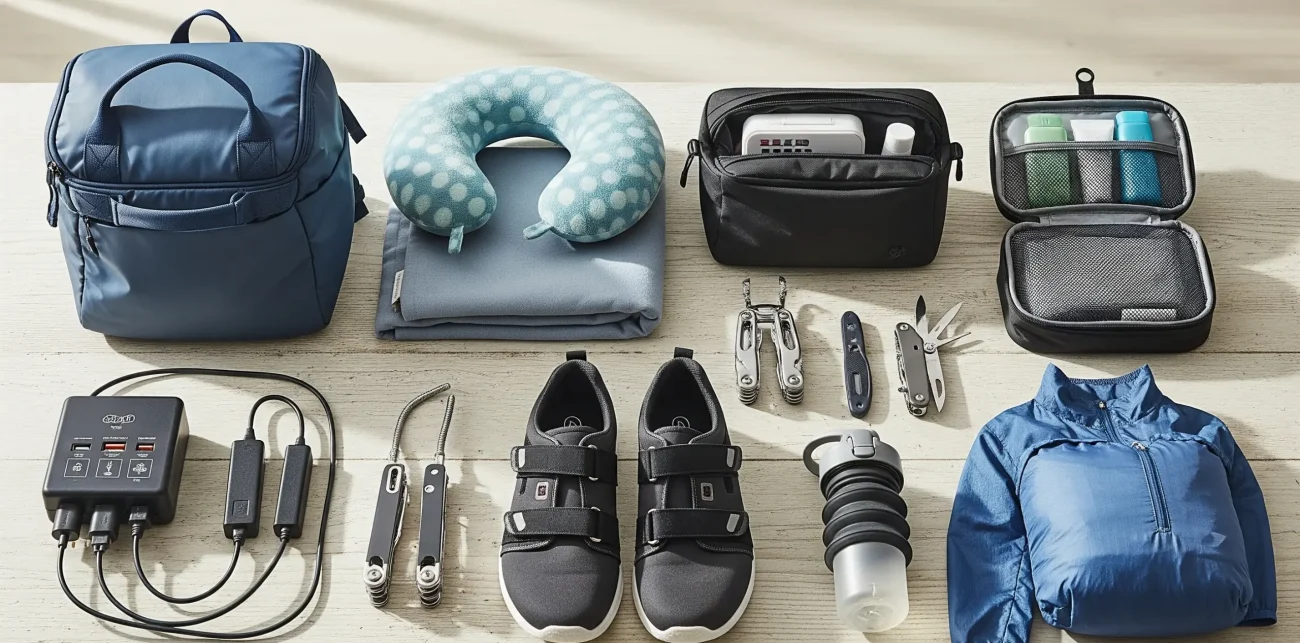
Packing the items that work both ways is a challenge to the weight of the luggage. Consider multi-purpose outfits like the ones that are reversible so that you can get two looks on a single piece of clothing.
My favorites are the quick-dry fabrics, which help me save on the number of clothes that I bring because I can easily wash and reuse them. A hack I particularly like? A shirt, able to be stuffed into a small bag to store in my bag whenever I need it.
These clever decisions make you travel lighter without missing the important things you can carry. Travel weight hacks help you manage all things regarding packing.
Rolling vs Folding: Best Techniques for Space & Wrinkle Reduction
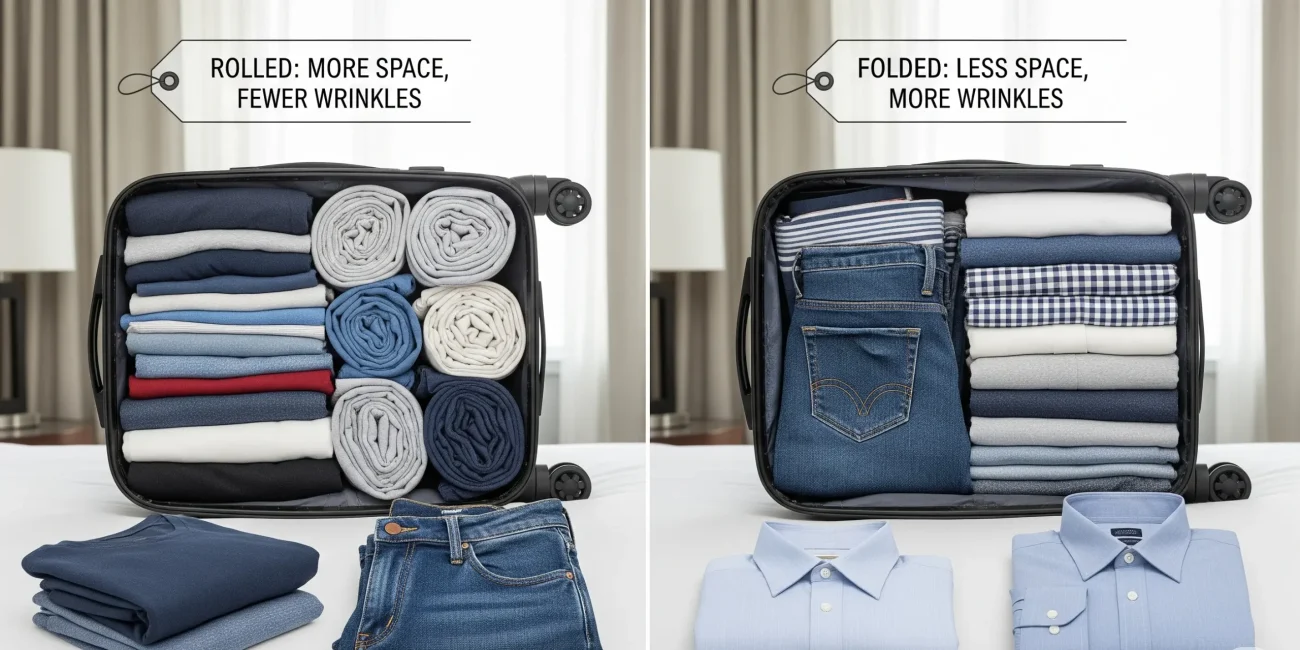
As far as packing is concerned, it is better to roll clothes rather than fold them. Rolling can save space by compacting the fabric into a small package and can help delay wrinkling thus your clothing appears newly unpacked. Folding will however occupy more space and in most cases leave crevices.
And to save space to the maximum, use compression bags or vacuum-sealed packs. These devices smoothly release the air and compact bulky objects such as jackets and sweaters, making your baggage lighter and less crowded.
I began rolling years ago, and it has halved the size of my bag- I never have to worry about wrinkled clothes anymore.
Transfer Weight Smartly: What to Wear, What to Pack
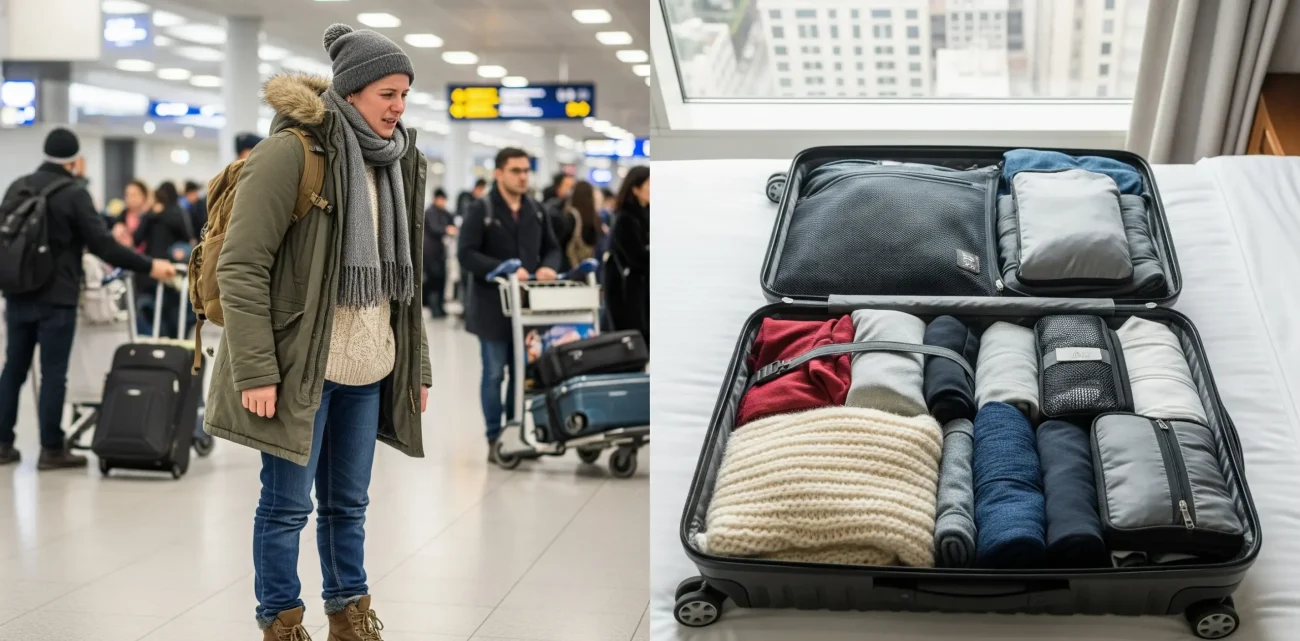
The simplest of the reduce luggage weight tips is to bring your bulkiest pieces on the plane. Layering is fantastic in this case, wear your thickest jacket, your heaviest shoes and even a sweater. That saves you megatons of space and weight in your bag.
I wear my hiking boots and jacket on the flight, too heavy to carry. Layering makes you comfortable in cold airports or on cold flights.
Packing weight like this is a clever way of saving luggage space so that you get to pack necessities and avoid excess baggage charges.
Borrow, Rent, or Buy at Destination

When planning to travel light, one easy trick is to pack fewer things you can rent or borrow or purchase in your destination. Items such as baby items, hair equipment, towels, beach gear, or snow equipment occupy a lot of space and they add weight.
Upon a recent visit, I hired a baby stroller rather than to spectacle my own around, and this single-handedly saved me loads of trouble and travel space. When travelling to the beach, umbrellas and towels can be purchased or borrowed at your destination so you have less to pack. This intelligent move allows you to travel without the extra weight and the extra tension.
Weather-Driven Packing: How to Adjust Based on Forecast
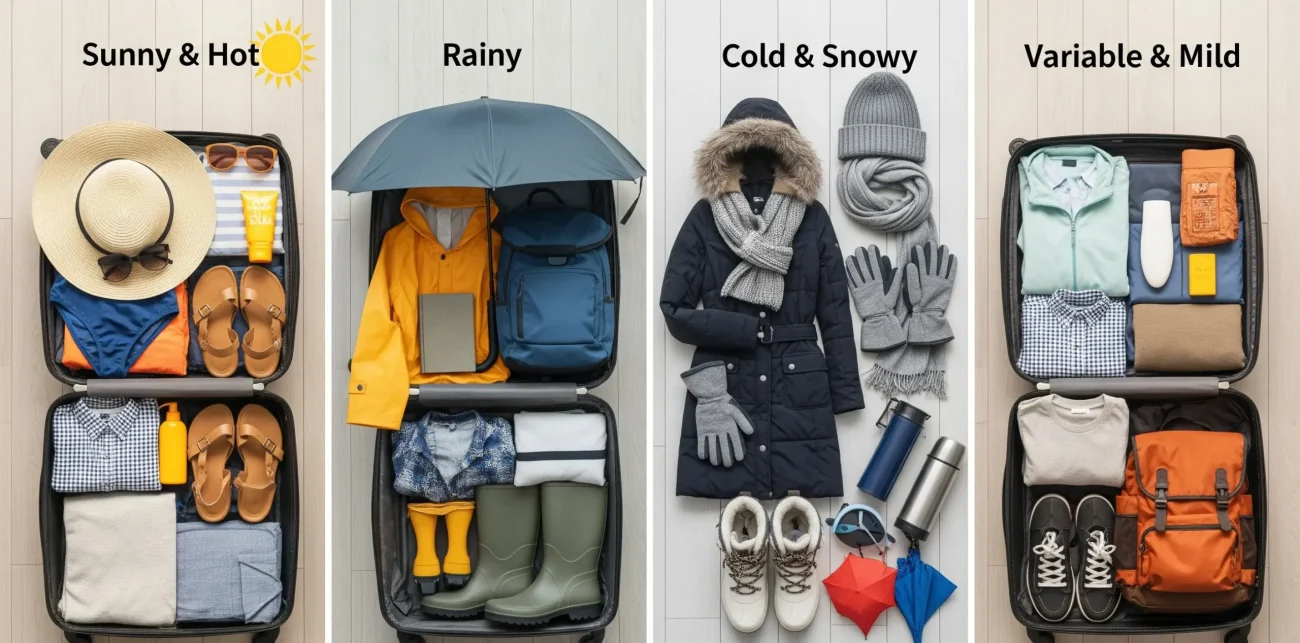
You can refer to the weather forecast so that you do not overpack. The weather is essential information because you do not need to bring along extraneous layers that you will not wear due to excess warmth or heat or excess rain.
I make sure that I verify the weather forecast a few days before my trip and then pack accordingly to my capsule wardrobe. I take light layers when it is warm instead of heavy jackets. I pack a folding umbrella instead of a raincoat in case it is going to rain.
This easy move makes your bag weigh less and your packing light spread out on some essential items.
How to Do a Final Baggage Audit Before You Leave
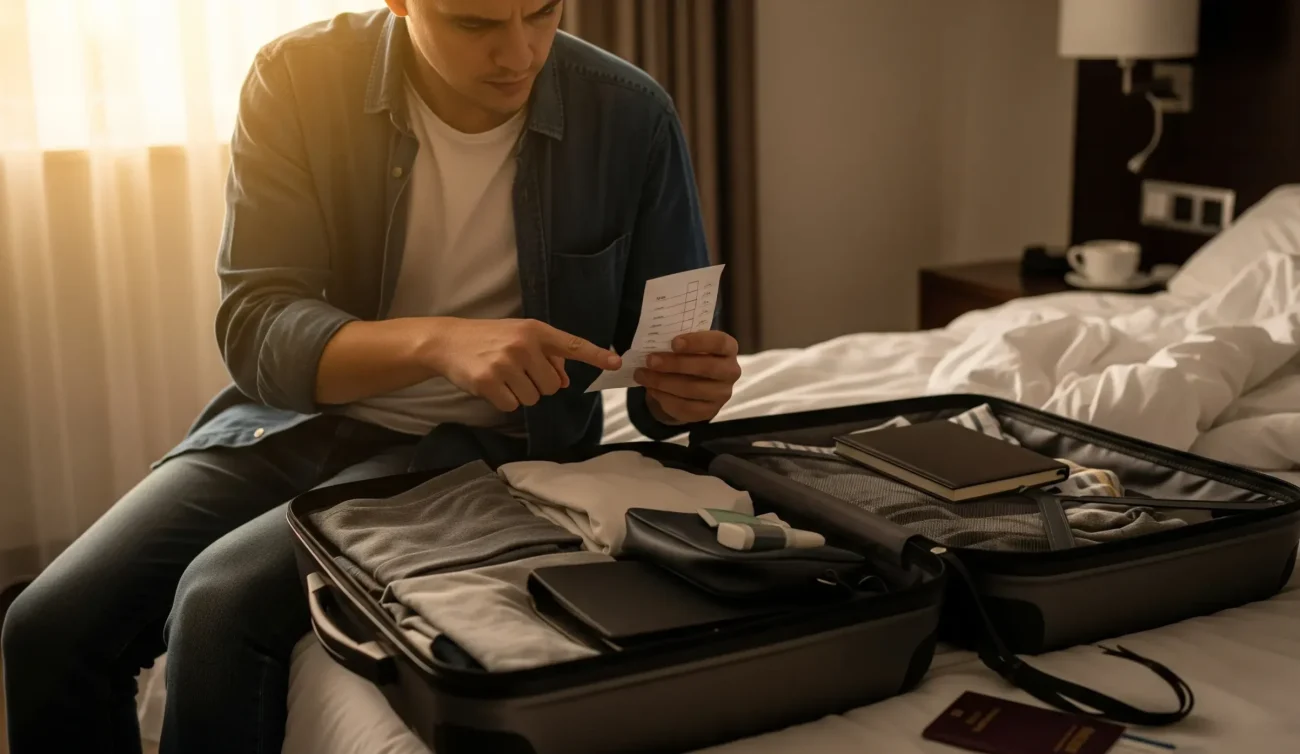
Before you zip up your suitcase, take a few minutes to do a final baggage check audit. This is a fast tool that would allow you to eliminate 5-10 percent of the weight in your luggage as you identify the things you really don’t need.
Check for duplicates, extra shoes, and heavy toiletries that can be saved till your arrival. I have a mental checklist and eliminate anything that feels like just in case.
By doing this last-minute audit, I have avoided overweight fees and my travel is beyond easy. It is an easy-to-form habit that is quite valuable. Above all reduce luggage weight tips will help you in case of any query.
FAQ
Use a capsule wardrobe, compression bags, lightweight luggage, checklists, and final audits to pack smarter and lighter.
Yes, rolling reduces wrinkles and fits clothes more tightly, saving space though not actual weight.
Lightweight luggage can save 2–5 pounds. Polycarbonate bags are usually lighter and durable compared to fabric.
Charges vary between $75 to $200+ in the U.S and the maximum of up to $300 may be charged internationally.
Packing cubes help place items, whereas compression bags eliminate air reducing the volume.
