
Blog
Overpacking Tips: Smart Travel Packing Advice for Travelers

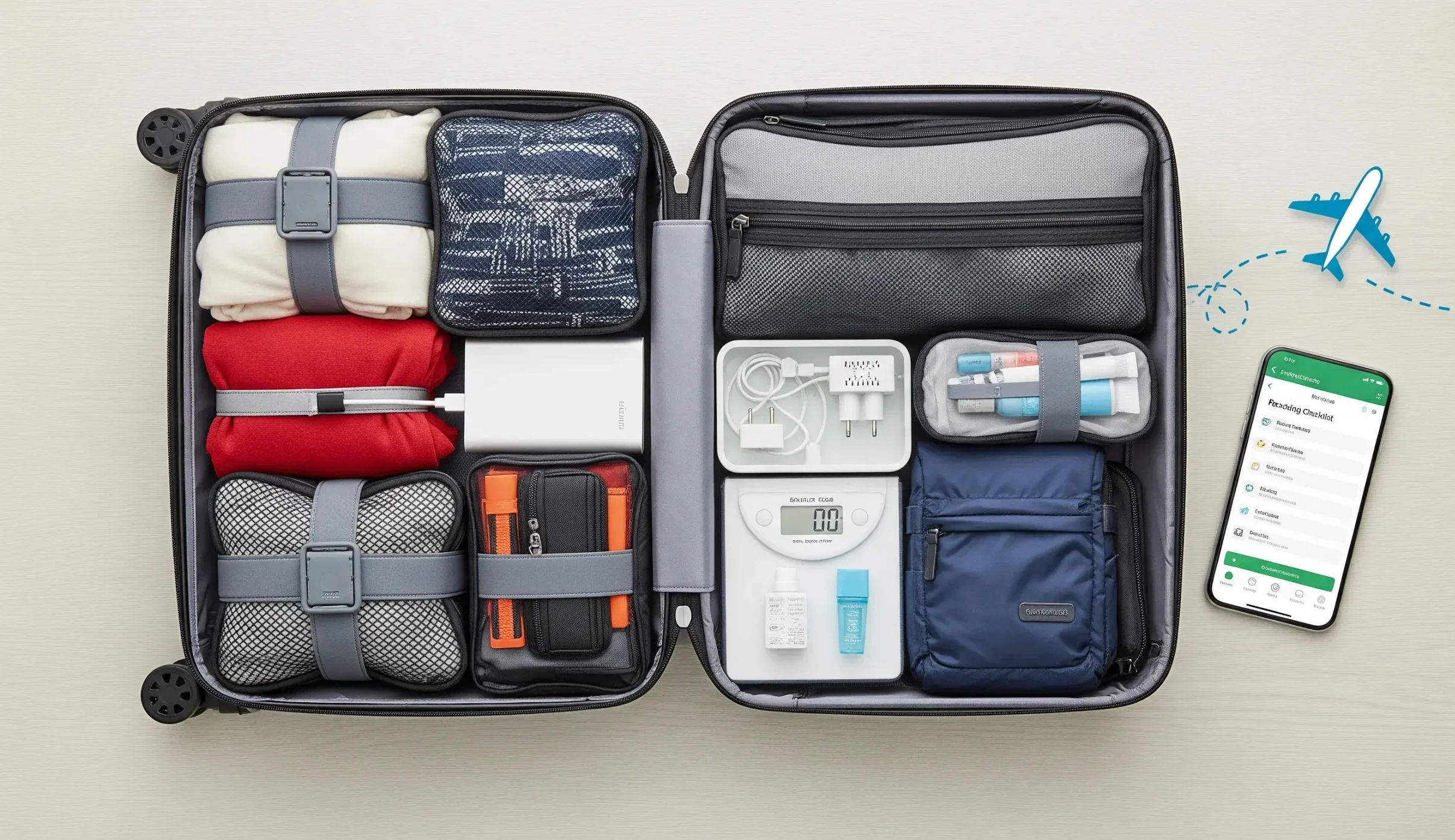
The Real Travel Problem: Overpacking Stress
Overpacking tips are often the last thing on a traveler’s mind, yet they’re among the most important. The majority of travelers travel with the mentality of just in case and come to regret it when they are carrying around a 20kg suitcase and find it hard to locate items in it when they are walking around, or get billed an overweight bag fee. Research indicates that close to 80 percent of travelers except amidst overpacking, and over 60 percent of them used to feel stressed and bewildered due to the phenomenon.
This is not merely a nuisance; this is a matter that has an impact on the whole process of travel. Overpacking will deprive us of fun and freedom of traveling with duration at the airport desk due to luggage clutter, back pain, etc. That is why this article is about practical overpacking tips and travel packing advice at an expert level. By knowing how and with a changed attitude, you can pack light, smart, and without stress.
Why We Overpack: Breaking Down the Problem
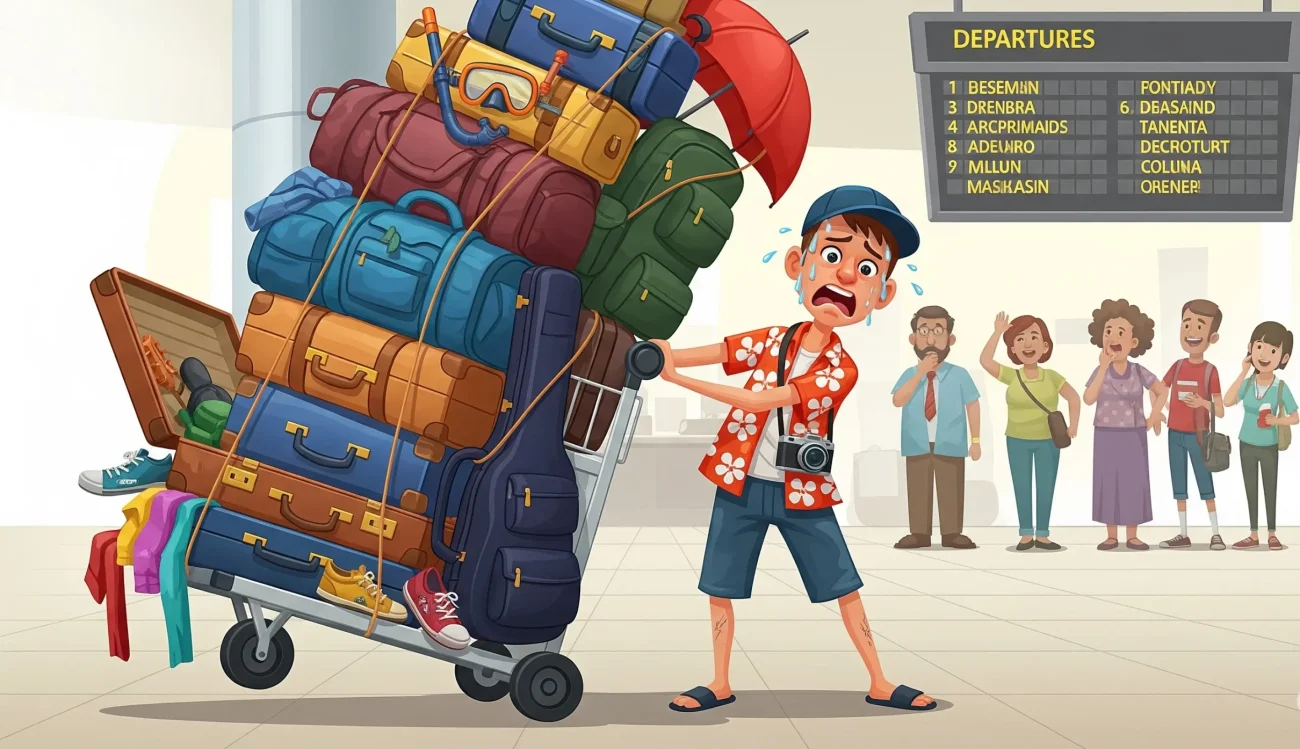
The “What If” Scenario Trap
One of the biggest causes of overpacking is fear. What if it rains? What if I’m invited to a fancy dinner? What if my shoes break? These what-if scenarios lead us to pack duplicates or items we never use. Overpacking tips focus on preparing based on probability, not possibility.
Absence of Proper Planning
When you don’t know what you’re going to be doing on your vacation—weather report, activities, or duration of your stay—you can just pack miscellaneous things “just in case.” Without a routine or a list, your packing is a guess.
Misread Bag Capacity
Most visitors perceive a stuffed suitcase as a full suitcase. But packing to capacity is not the same thing as packing smart—it’s overpacking. Overpacked bags strain zippers, crack wheels, and are over the airline’s allowable weight.
Disregarding Airline Regulations
Disregarding carry-on and weight restrictions not only makes things more stressful but may even be expensive. Different airlines have different baggage policies, but almost all charge extra for going over weight and size. Sly overpacking tips circumvent this by keeping your bag light and in compliance.
Overpacking Hacks That Actually Work
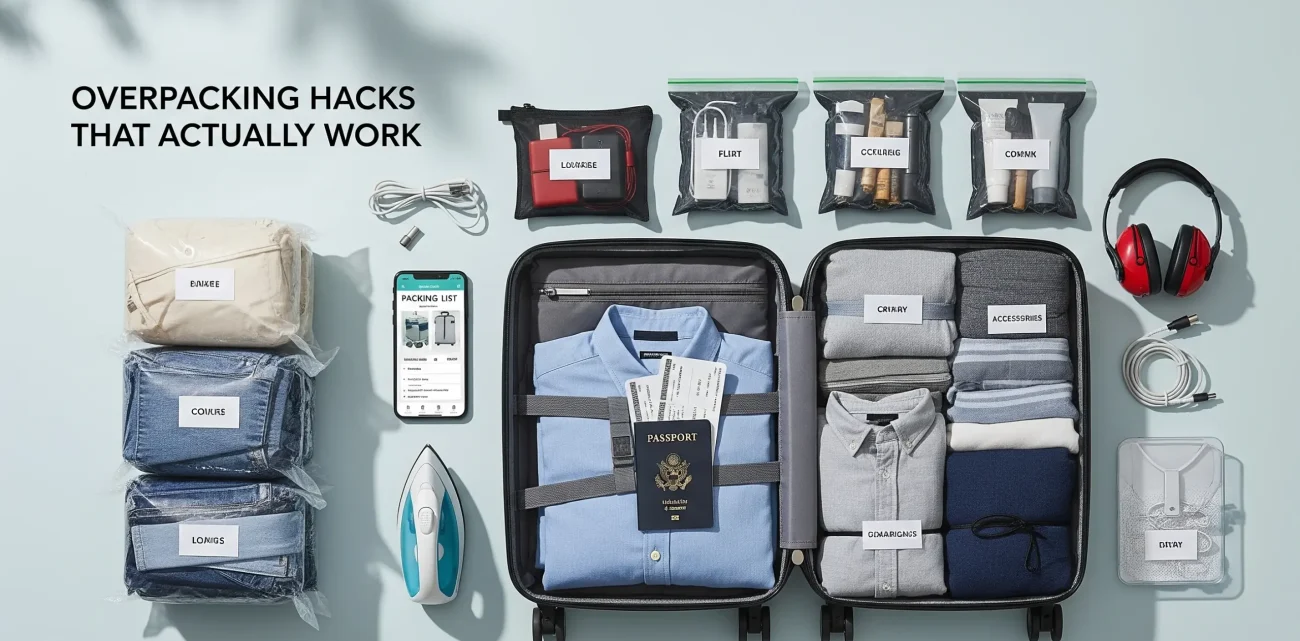
Start with a Skeleton Packing List
The first defense is a well-thought-out list. Divide it into necessities: clothes, personal products, gadgets, and documents. Such sites as Travelpro and The 5 Kilo Traveller pay much attention to the listing of the items according to everyday needs and activities. This organization will guide you against the last-time additions, which will unnecessarily make the work bulky.
Mix-and-Match Clothing only
You do not require 14 outfit varieties for a 7-day vacation. Rather, take clothes that match each other. The colors are neutral, and the designs are adaptable to combine variously. In the example, 3 tops and 2 bottoms make up to 6 outfits. Such materials as merino wool are lightweight, odor-resistant, and quick-drying, and they are perfectly suited to be easily worn twice.
Limit two pairs of Footwear
Footwear is cumbersome and weighty. The majority of specialists advise taking two pairs only: walking and casual or evening. Get soft, lightweight, and easily maneuverable shoes that are versatile. Also, remember to wear your bulkiest pair during travel as a way of saving space in the suitcase.
Roll Your Clothes, Don’t Fold
Wrinkles can be avoided by rolling clothes as opposed to folding. It is also easier to tell what you have already packed using this technique, which is supported by packing experts at CabinZero and Travelpro. To further organize and access things by category, then add packing cubes.
Be Smart With Toiletries
One of the most typical overpacked items is toiletries. Use travel-size containers and solids when possible. The 3-1-1 regulation by the TSA has three things that include 100 ml of liquid in one clear quart bag. Solid toothpaste tablets, shampoo bars, and solid soaps are good alternatives and cut the chances of leaks.
Select a Good Travel Bag
Do not take your huge suitcase on the trip because you have one with you. Take a bag that should satisfy the carry-on requirements and your realistic needs. The goal should be to have 15-20% of the space free: this gives flexibility, and you will not be over the plane weight restrictions.
Study where you are going to
After deciding what to bring, carry out research about the weather, the local customs, and events. When they have laundry service in your place, you will be able to wear things repeatedly and take less clothing. Do not overplan all possibilities; such items are often easy to obtain in the area.
Practical Tips for Packing to Travel Step-By-Step
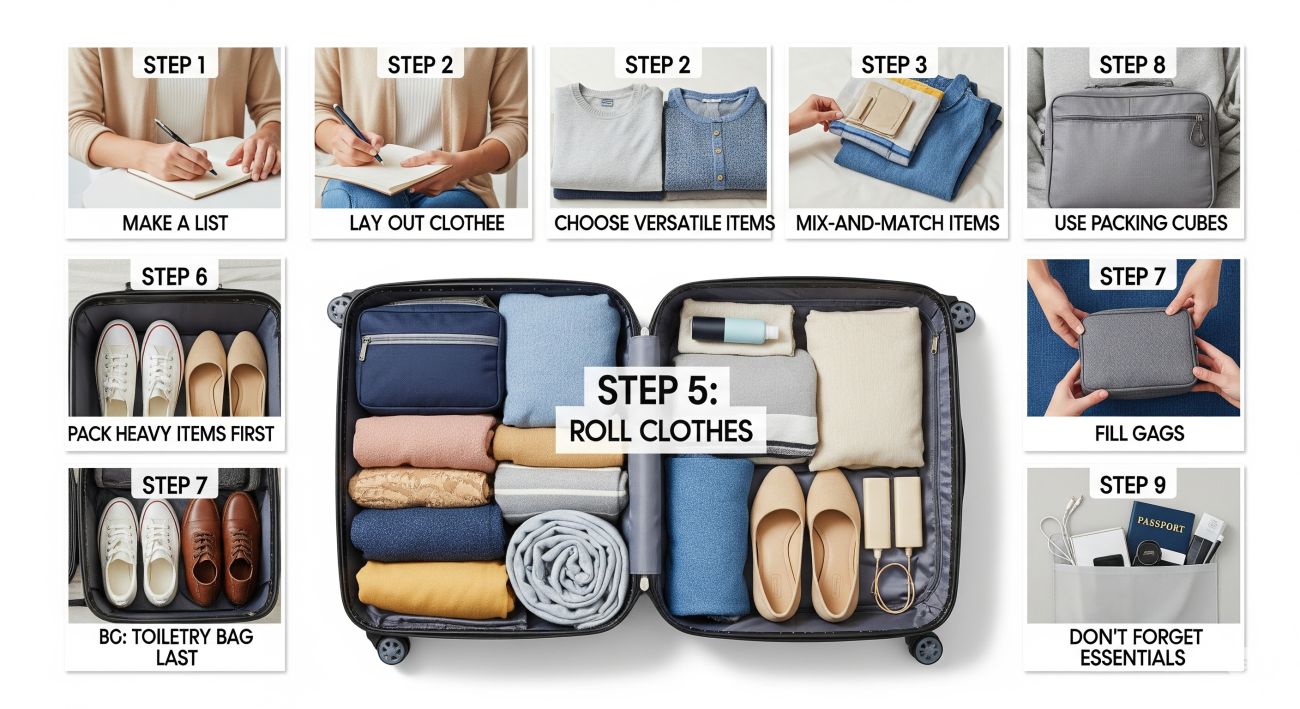
Step 1: Pre-packing
Start it by planning. Make sure you have looked into the weather forecast at the place you are going to. Make a list of activities you will be undertaking daily, and pick up the outfits. In case you opt to be inside most of the time, you may not need to carry a heavy jacket. When your trip is short, you may want to wash clothes halfway rather than take them with you.
In Step 2, it is actual Packing Day
Roll up all your clothes and save space. Use all the space you have in your bag—put socks or small things in the shoes. Place heavy items at the bottom of the bag (that is, overlapping the wheels in the case of a rolling suitcase). Make use of packing cubes that can separate items and not open the entire bag every time you require an item.
Put on your heaviest stuff when traveling—such as boots or a jacket. Liquids should be put in a portable pouch easily accessible at airport security.
Checklist Step 3 – Final
Weigh your bag on a digital scale already and zip it up to make sure you did not exceed the limit of the airline. Compare your list with the essentials that you have packed. Take some space to buy something during your trip. Finally, make a test lift; in case it is too heavy to carry up a flight of stairs, then you have overpacked.
The Explanation of Key Technical Terms

- Packing Cube: This is a smaller zippered handbag that you place inside your suitcase to help categorize clothing due to form or purpose.
- Compression Bag: It is a bag that has been sealed where air is forced out, making the clothes smaller to pack well.
- Carry-On Limit: The weight and size limit of hand luggage that can be taken in the airplane cabin without the need to place it as checked luggage.
- 3-1-1 regulation: A TSA regulation on liquids in carry-on bags—nothing over 3.4 ounces (100 ml) per container, all of which must be contained in a 1-quart-sized transparent plastic bag, one of which is allowed per passenger.
- Bad odor-resisting Fabric: Fabrics that can resist bad smells after repeated wear, such as merino wool.
Why These Overpacking Tips Matter
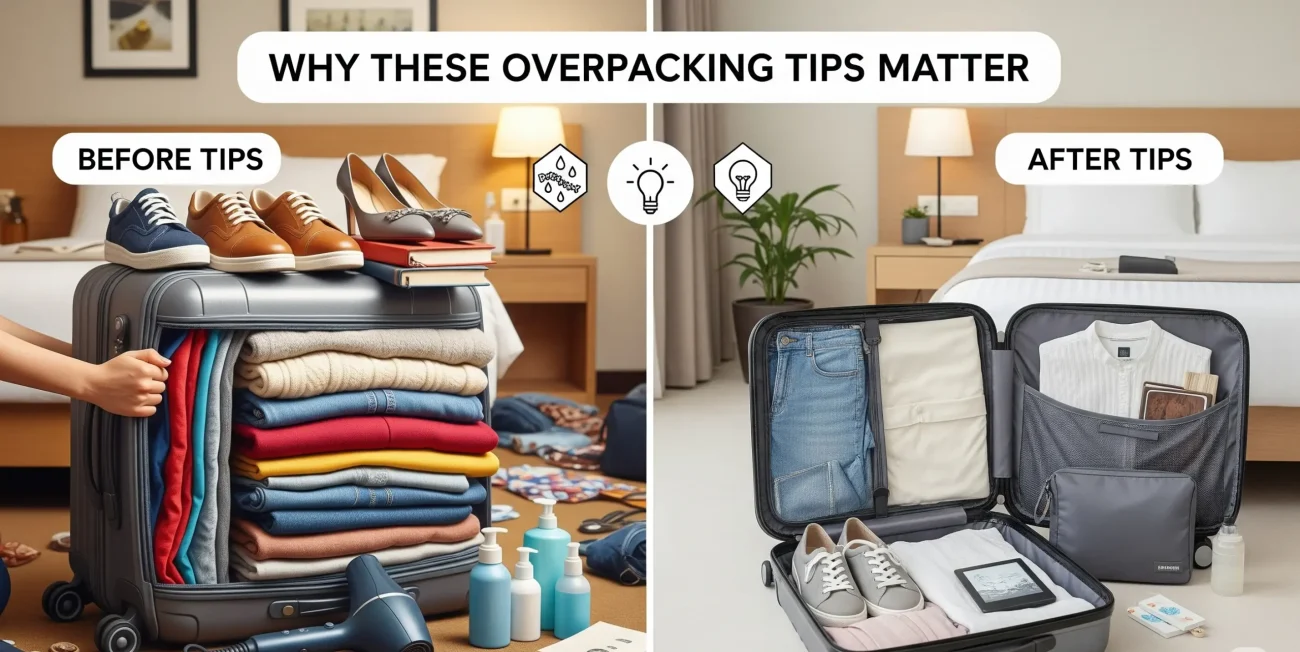
The idea of implementing these overpacking tips not only reduces your baggage weight but also creates a difference in your traveling experience. You will not feel so bound to airports and will not pay lots of money on carrying luggage, and you will never have to search in your cluttered suitcases. You will not waste time, space, or even your mind.
Proper travel packing advice also helps you to keep your belongings safe, avoid possible physical overloads, and make sure you never lack something you need but never get more than you need. The organized way of packing is equal to an organized mind.
Extras: Pre-Departure Packing Checklist

So, here is a fast checklist before you go to the airport:
- Packing list reviewed
- All clothing rolled and sorted in cubes
- Toiletries packed under TSA liquid rules
- Footwear limited to two versatile pairs
- Weather checked for destination
- Bag weighed and under airline limits
- pace left for souvenirs or extras
Final Thoughts

This should not be the case as far as packing is concerned. Pack light and travel smart with some right overpacking tips and well-organized travel packing advice. It is a matter of changing your mindset; stop thinking about what can happen instead of focusing on what is necessary. Apply such tricks as rolling clothes, packing cubes, and selecting multifunctional things.
The next time you are on the road, your baggage should be the last thing to single you out. Pack smart to have fewer things, be more organized, and have more fun on the road, because it is not only a way to save space but also a way to get freedom.
