
Blog
Multi-Climate Packing Tips: Master Layered Travel Outfits

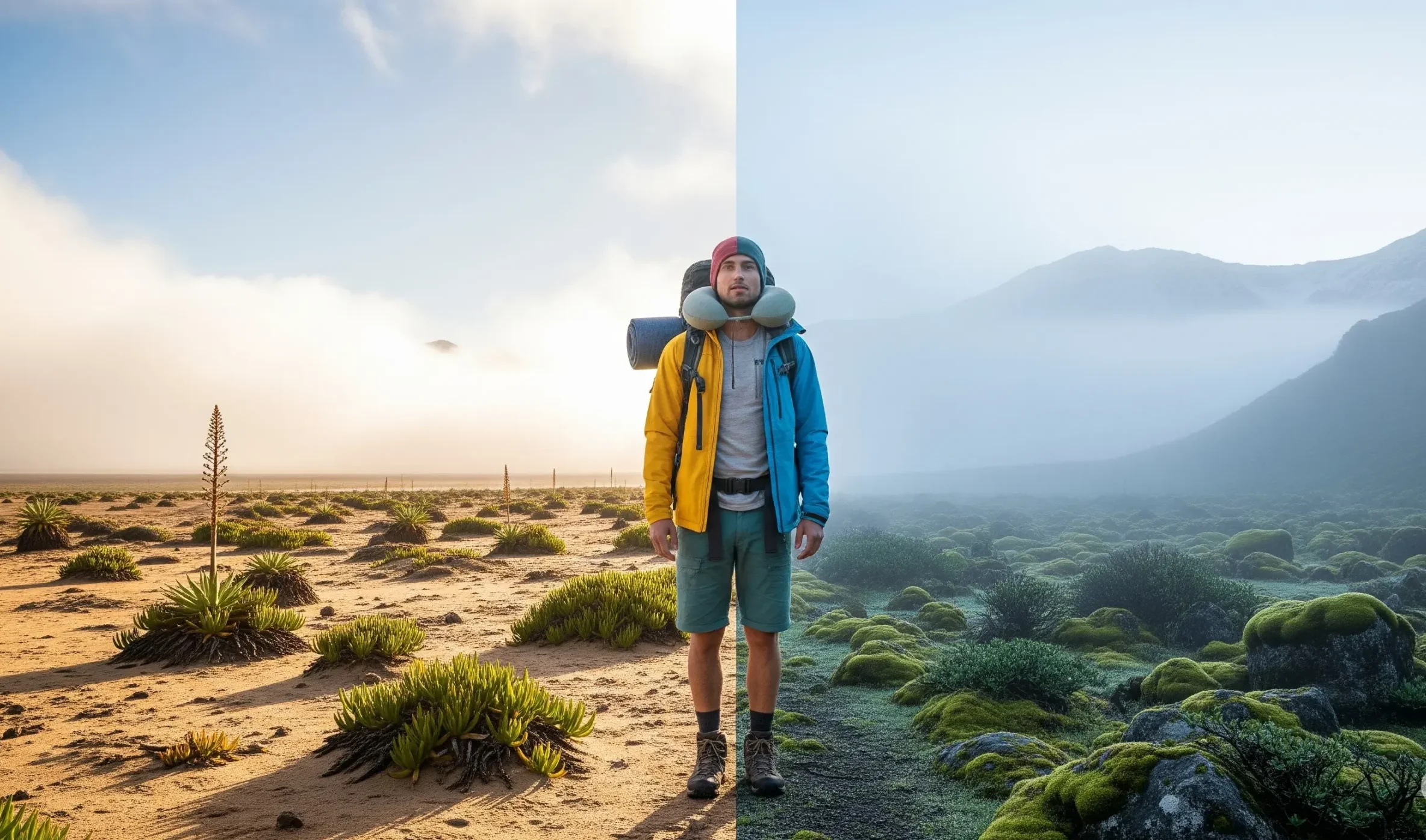
Multi-climate packing is one of the biggest challenges travelers face. You’re going from sunny cities to snowy mountains—or maybe from humid beaches to breezy highlands. You worry about packing too much. You fear forgetting essentials. You are not the only one.
Most passengers are either overpacked, thus adding burdensome bulk to their luggage, or they are underprepared and are left feeling cold, wet, or squashed. It is at this point that layered travel outfits are needed. Layering can allow you to keep your suitcase warm, dry, and stylish without overloading it.
This guide will help you master multi-climate packing using versatile layering strategies. We’ve taken proven advice from experienced travel bloggers like CleverDever, Wherever, JustWriteIt.Live, and MeredithSanDiego. Everything here is designed for easy understanding—even for someone with matric-level knowledge.
The Problem with Packing for Multiple Climates
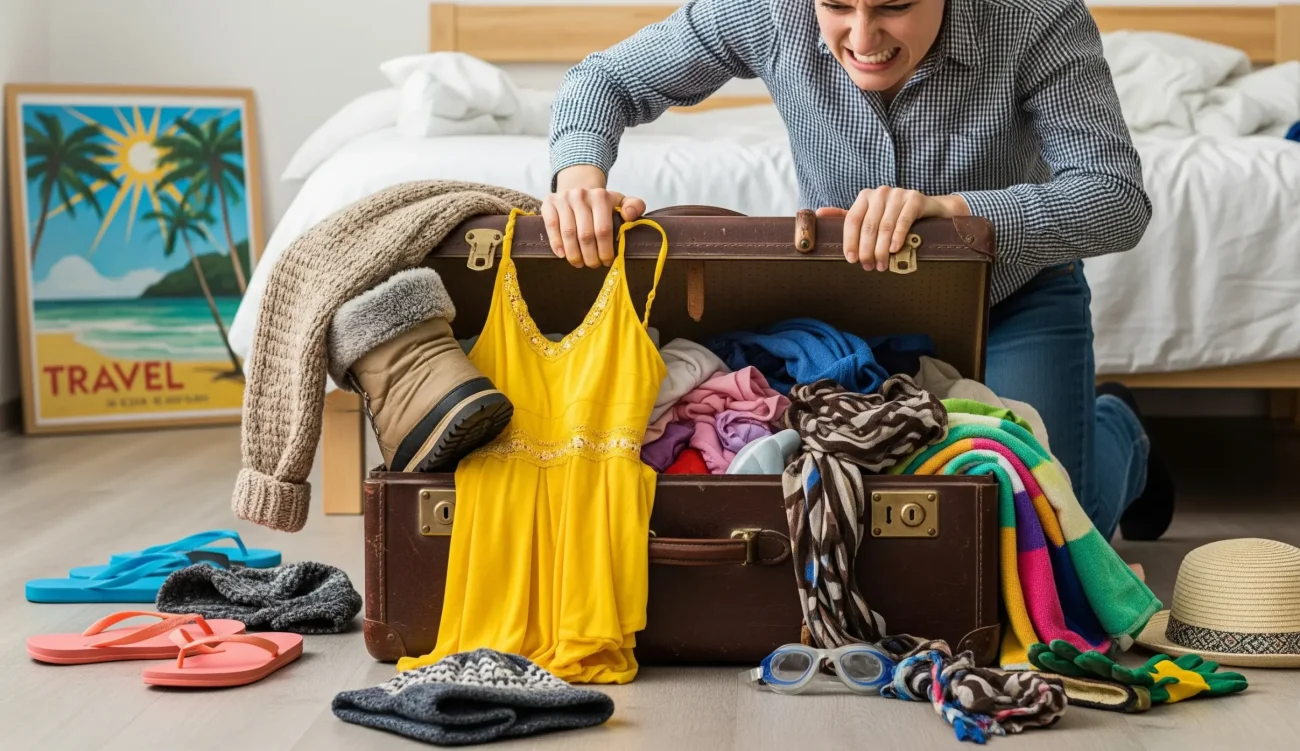
One of the most frustrating issues that travelers have to deal with is how to pack their luggage to accommodate a trip that will take them to sunny beaches and mountain towns that are cold most of the time. It is a nightmare whether you want to take a backpacking adventure to another continent or you have a two-week trip that will take you out of tropical cities to colder places. Majority either overpack by carrying heavy and untidy bags, or they underpack and then become uncomfortable and unready when the weather disappoints.
That is where multi-climate packing enters. It is not only the issue of carrying extra clothes but carrying the right ones. It seeks to pack smarter and not harder, with a strategy that will enable a person to make adjustments to various climatic conditions without difficulties. Layered travel outfits are, probably, the most popular among them, as they can make you either warm or cool by adding or taking off layers. This is one of the ways you may save some space, reduce the degree of stress, and facilitate your trips a great deal and enhance their effectiveness with that.
Why Multi-Climate Packing Matters for Every Traveler
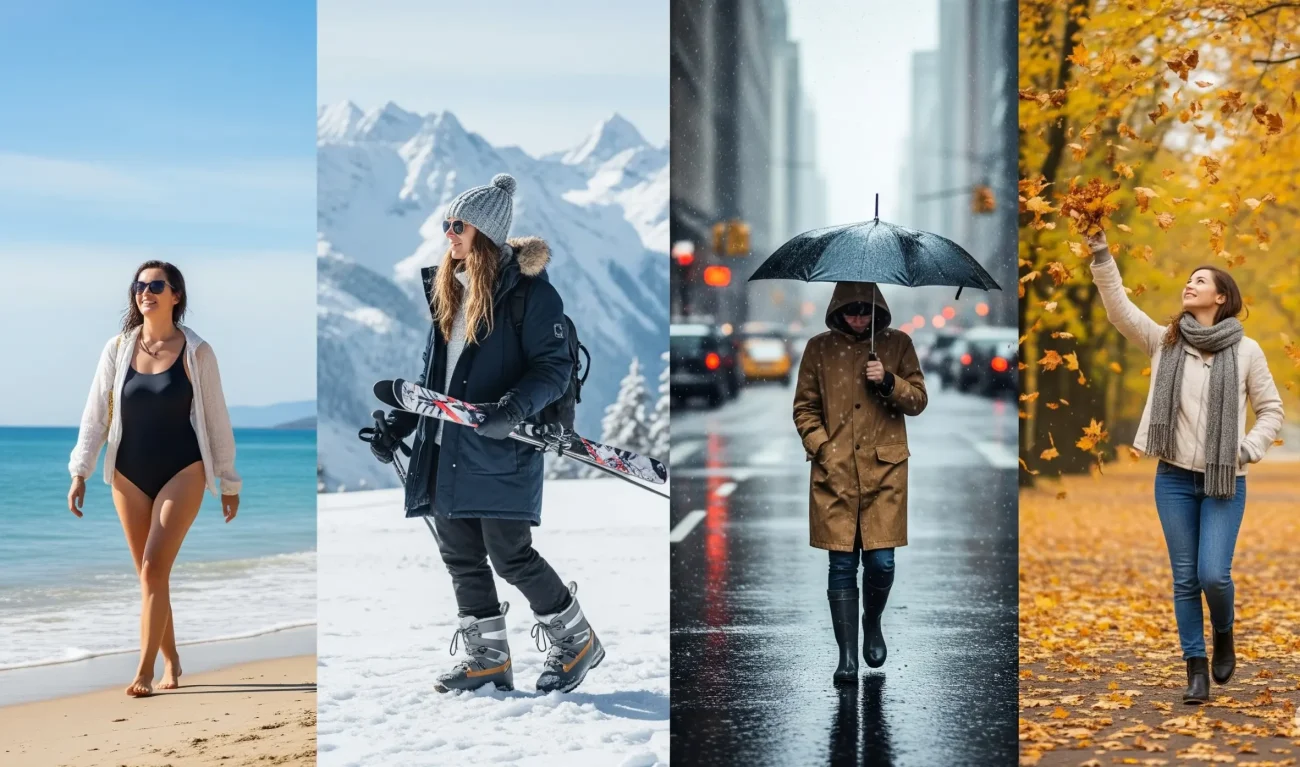
Weather does not always give us clear weather forecasting. No matter whether you check the predictions or not, you are likely to have a change in the weather. These days we may find we have a warm day, then at night it gets cold, especially in mountains or near the sea. In case your destination visit consists of varying climate regions, such as hot desert and refrigerating alpine, you must be ready to afford the extremes.
That is why multi-climate packing has become a travel necessity. It helps in making sure that you are good to go in any event without stuffing your suitcase. In addition to comfort, it can also save you the money you will spend on checking in luggage, as well as help you escape the embarrassment of having to buy extra layers when on the road. The greatest thing is that you will have freedom to have fun on your trip, and you will not need to think a lot before settling on the kind of attire to wear.
The Science and the Art of Layered Travel Clothing
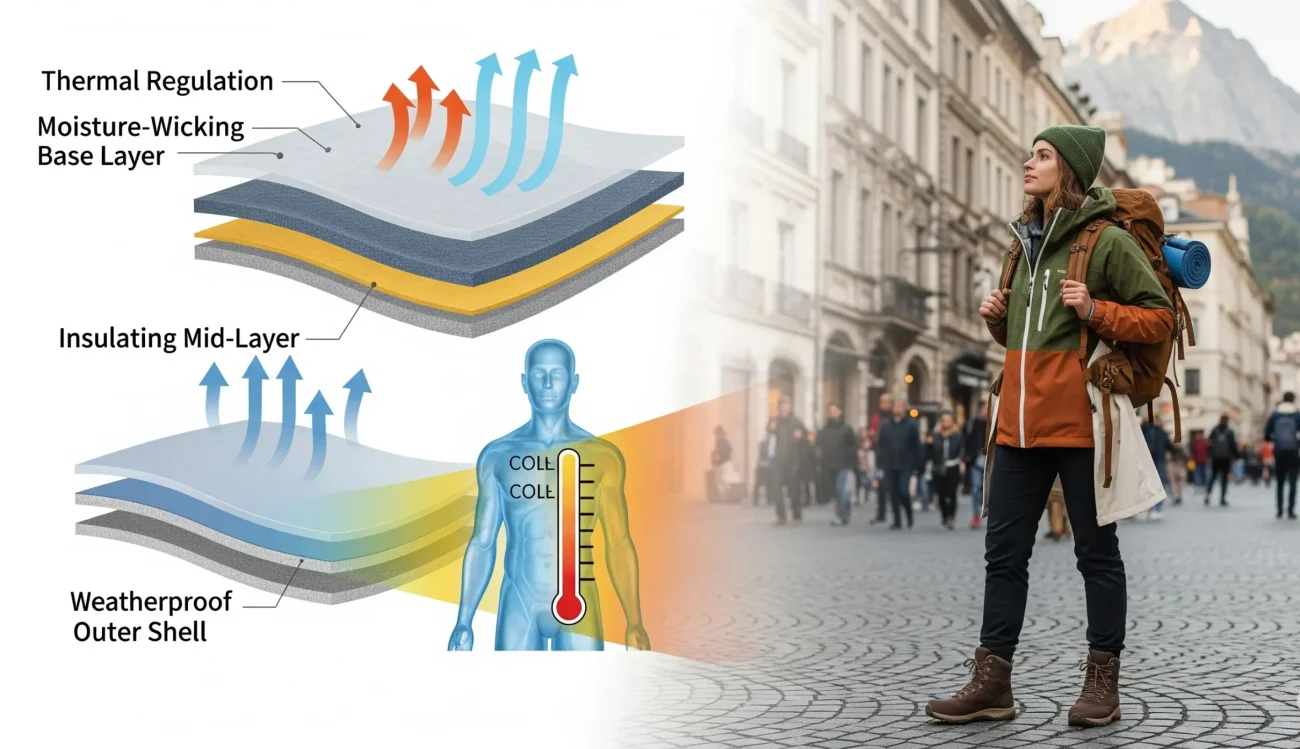
The main idea behind prosperous multi-climate packing is layered travel outfits during the journey. This method consists of the usage of numerous menswear layers that fulfill certain purposes, which will enable you to regulate your body heat levels and adapt to diverse weather conditions without having to change clothes every time you find yourself in a different situation that requires a different outfit.
There are three main parts in the layering system. The first one is the base layer that lies on your skin. This fabric is a moisture-wicking layer, which dries you no matter if you are under the burning rays or walking in the rainforests. Fabrics such as merino wool or lower-weight synthetic fibers are optimal since they have fast drying times and are not odor-prone.
Then there is the middle layer that gives insulation. This is what makes you warm during cold conditions. Fleece pullovers, down jackets, or even insulated vests are excellent. In this case, there is the aim of trapping your body heat but at the same time still making it breathable.
And last of all, the outer or shell layer that keeps you shielded against wind and rain or snow. To this end, a good windproof and waterproof jacket can do the job. And ideally, if it is breathable as well, that is even better—you will not sweat and feel hot when you are engaged in an exercise.
These 3 layers work like a climate control for your body. You can wear two in cold and rainy weather or only one while it is warm and sunny. What is the good news? Each of the wonderful products can be reapplied and combined with other products in order to achieve a multi-adaptation to any room.
Picking the Correct Clothes for Multi-Climate Travel
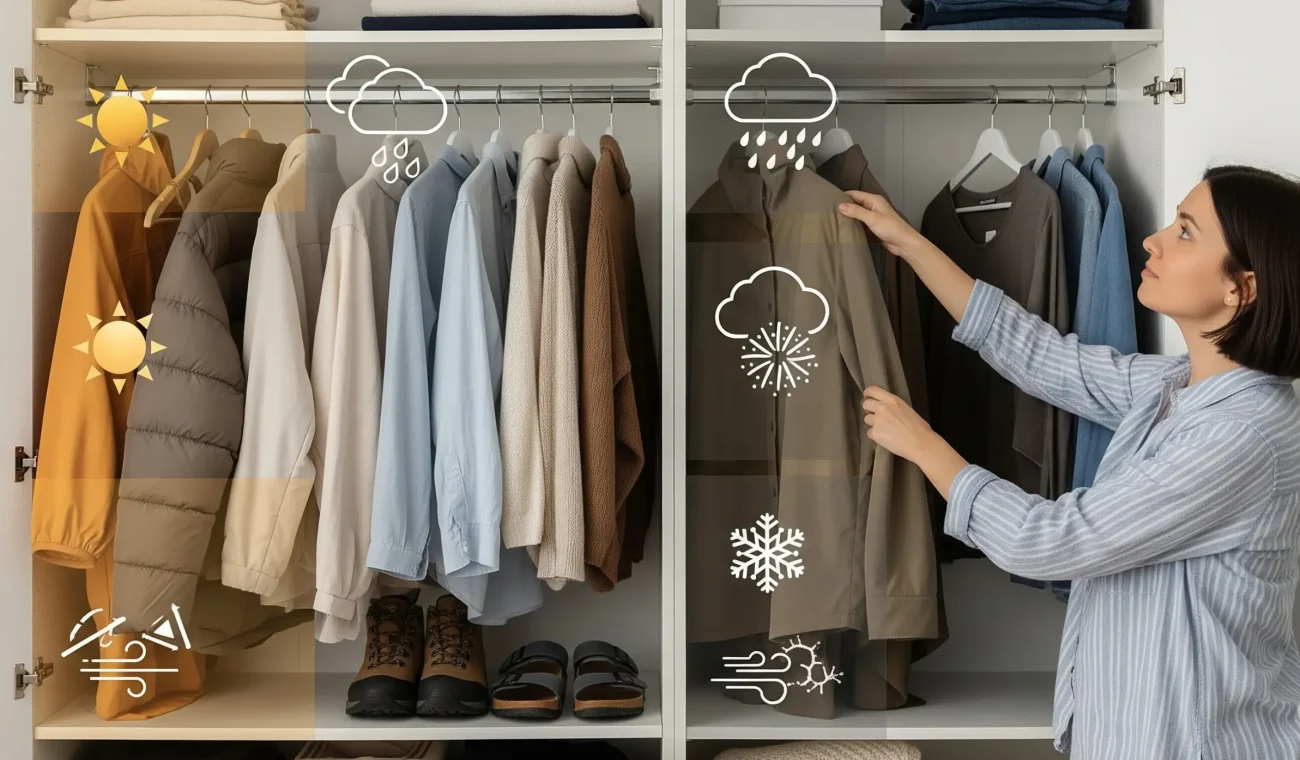
In the case of multi-climate packing, it is better to be focused on the qualities of clothes and not the style because it is better to choose clothes by their functionality, practicality, and wearability. Clothes must be comfortable and lightweight, have lots of layers, dry incredibly fast, and cannot get wrinkled. The neutral colors are an intelligent choice since it will be easier to combine and match them and make a combination of various outfits with fewer pieces.
Begin with two or three layers of base tops, preferably using merino wool or breathable synthetic fabric. Also, wear one of your base layers that are long-sleeved on a cold day. When bottoms are concerned, specify one pair of low-waist jeans or other pants of casual style, one pair of lightweight pants that could be used when traveling (or quick-dry), and one pair of leggings or joggers to wear and layer during off-time.
Any type of insulated jacket, whether packable fleece or not, must find its way into your mid-layer wardrobe. Find one that can be easily compressed and does not occupy much space in the luggage. To cover you, get a top-quality waterproof, windproof coat with a hood. This will serve as your protection against rain, snow, and gale-force winds.
Shoes also play an important part. Shoot to bring no more than two pairs with you: one should also be comfortable and supportive to walk around in or to wear daily, and the other one should be good to hike in or use when there is more to deal with wetness. Also, do not forget to carry the heavier one to save space in the bag during transportation.
Scarf, gloves, and a warm hat or a sunhat are also nothing to carry with you, and they give a great variety to your layered travel outfits. Some of the options that can be made are a lightweight buff or neck gaiter that could be utilized in various ways, whether to be warm or to use the buff to protect you against the dust or the sun.
How to Pack Smart Without Overpacking

Effective packing is all about making the most of what you have and having something count. This is one of the best tricks when packing the suitcases since there is the clothing-rolling trick to follow rather than the rule of folding the clothes. Wrinkles are reduced by rolling, and it will enable you to fit when you want to in small spaces. It also aids in curbing your wardrobe to stay small and well-organized.
Packing cubes would also prove very useful. It is possible to distinguish according to layer, such as base, mid, or outer, or according to type of outfit. This is convenient, so you do not need to go through all your bag to find anything required. The next super trick is to take smaller objects such as socks, underwear, or chargers and fit them in your shoes and utilize every little space.
When going out on a multi-climate packing trip, you are always advised to keep your bulkiest pack on during your flight or on a travel day that may take a long time. Wear items like boots and a jacket rather than carrying them in case of bringing them along. This relieves you of the space in your bag, and it prepares you in case of a change of temperature during transportation.
Packing light is also given a big part by laundry. Wear easy-washing items that are able to survive in the sink of a hotel or washing machine—items that dry up fast. In such a way, you will not need to carry an extra outfit each day of your trip.
Real-World Application: Example Multi-Climate Itinerary
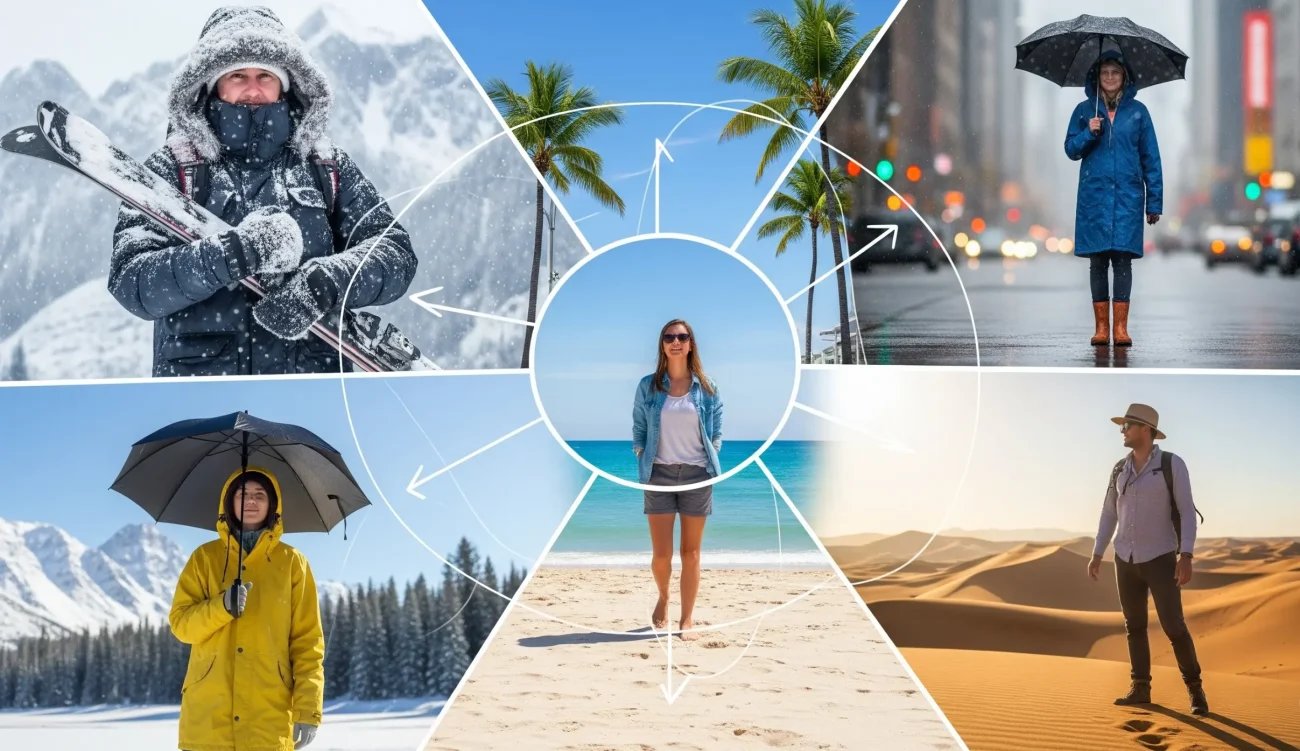
How the layered travel outfit can be used in practice: Then, let us suppose that you are going to a cold mountain town and you will leave the warm seaside city. Your tour involves trekking, eating out, and touring the area that has temperatures as high as 30 o Celsius and as low as 5° Celsius.
Here, you may have a base-layer t-shirt and travel pants as your morning items at the time of sightseeing in the city. In the cold of night, you add on your mid-layer fleece and combine it with a shell jacket if there is a gusty wind. By the time you get to the mountain town, you wear all three layers so you stay warm during the hikes. In the evening, replace your basic tee with the long-sleeved one and add an insulated jacket to enjoy the comfortable feeling.
This means that out of only a handful of basics, you can put together several outfits that would serve various activities and temperatures. Well, that is the magic of clever multi-climate packing.
The Things to Avoid When Packing for Cool and Warm Climates

Even when you have a very good plan, it is simple to make errors that increase the weight and cut down on functionality. A mistake that most people make is bringing a huge, heavy coat. Although it can be viewed as an essential garment most of the time, such a garment occupies too much space and does not provide as much freedom of movement as layered pieces do. Instead, utilize your base, mid, and outer layers to deliver the same amount of warmth without the bulk.
Another wrong thing to do is to carry too many shoes. Although this is enticing, having more than one pair is wasting space. Unless there are specialized requirements in your schedule, wear two flexible shoes. Moreover, avoid carrying clothes that are heavy in cotton, and base layers are not an exception. Cotton picks up water and retains it to age, and it also takes long hours to dry. This may keep you feeling cold and very miserable.
And finally, they should not neglect the weather prediction and the destination. Some amount of research work goes a long way. The average temperatures of your route, whether it will be raining or windy or not, can assist you in determining just what to pack and what to leave at home.
Conclusion Thoughts: Pack Lighter, Travel Smarter
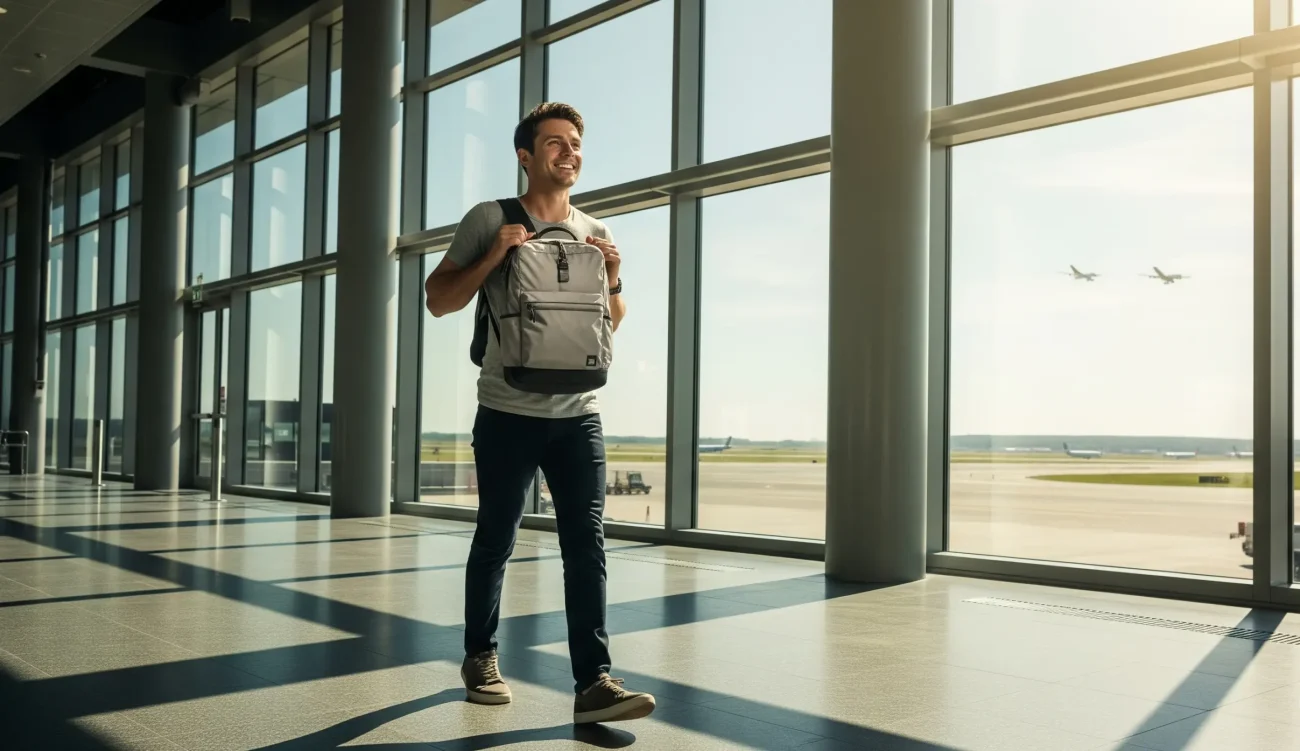
Traveling with different climates need not be complicated to pack. Planning well and having a bit of proper equipment helps make the process of multi-climate packing stress- and problem-free. Layered travel outfits will keep you ready to face many different kinds of weather without carrying either too much or not enough.
Pay attention to quality, not quantity. Look at multi-purpose items that can be layered, are fast to dry, and blend together. Be outfitting functional, not fashionable. Adhere to a compact list, apply effective packing strategies, and forget to pack more; instead, leave some space in your bag for experiences rather than a wardrobe.
You will be prepared whether you are going to snow-capped mountains or to the tropical beaches or both. The very well-dressed, assured person was comfortable with the journey in each step.
