
Blog
Top 4 Hiking Trip Packing Tips for a Safe and Easy Adventure

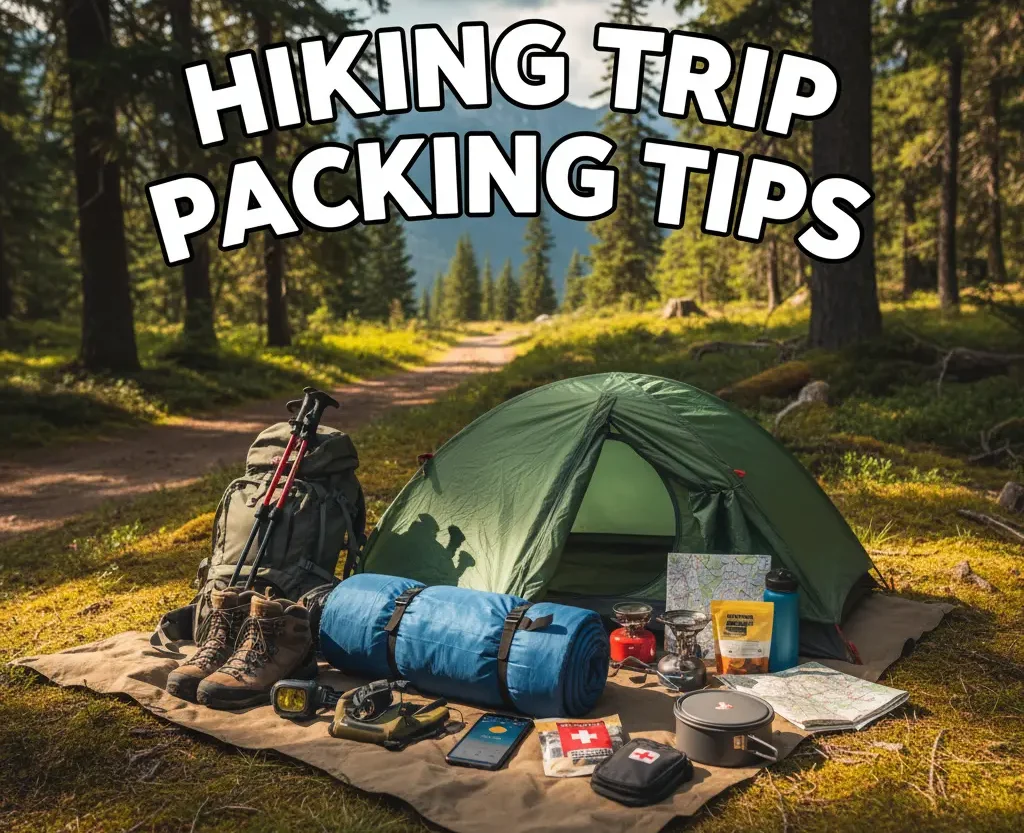
Packing for a hiking excursion might seem challenging, but with the correct advice it becomes much simpler. These hiking trip packing tips will keep you prepared for anything whether you are off for a day hike or a longer trip. Let’s start with the four most vital factors to keep in mind when packing your hiking travel gear.
- Pack Light but Smart
Hiking is more difficult and less pleasurable with a large pack. Select only the necessities and gear meant to satisfy many needs. A good choice, for instance, would be a jacket that shields you from rain and keeps you warm. Packing sensibly helps you to conserve energy and appreciate your hike.
- Plan Your Equipment Cautiously
Maintain your belongings arranged with packing cubes or small bags. Finding your necessity becomes simple without having to sift through your entire backpack. Any excellent outdoor packing guide includes having a defined system since doing so helps to maintain the dryness and safety of your equipment.
- Pack suitably by checking the weather.
Before you leave, always consult the weather forecast. Should rain seem probable, bring waterproof clothing like quickdry garments and rain covers for your bag. Being ready for the weather ensures that you remain at ease and safe whatever nature sends your way.
- Remember the Fundamentals
Certain things are indispensable on every trek: sunscreen and a hat, plenty of water, food, a first aid kit, map or GPS, and sun protection. Important components of any hiking travel packing list, these foundations help to keep you energized and safe.
Following these four packing pointers will help your hiking vacation to be more pleasant, safer, and much more enjoyable.
Selecting and Organizing Your Hiking Gear
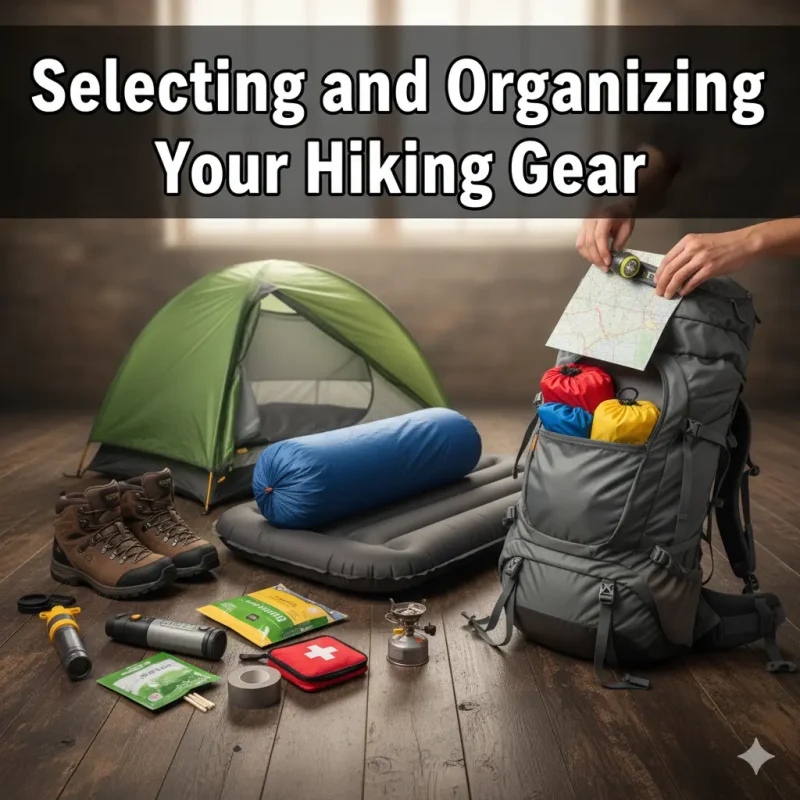
Selecting the appropriate equipment is a major factor of an excellent hiking expedition. I invariably choose lightweight hiking gear to suit my travel length and climate. Multipurpose products reduce area; for instance a warm waterproof jacket.
Hiking is simpler once I have my equipment if I arrange it properly. I keep everything neat by means of compression bags and packing cubes. In one cube go garments; food and cooking equipment in another. This helps me to rapidly locate what I need without having to go over my whole backpack.
Heavier items close to your back and lighter ones near the top help balance your load. Easy access to items like rain gear and snacks helps one save trail-related time.
Minimalist Packing Strategies
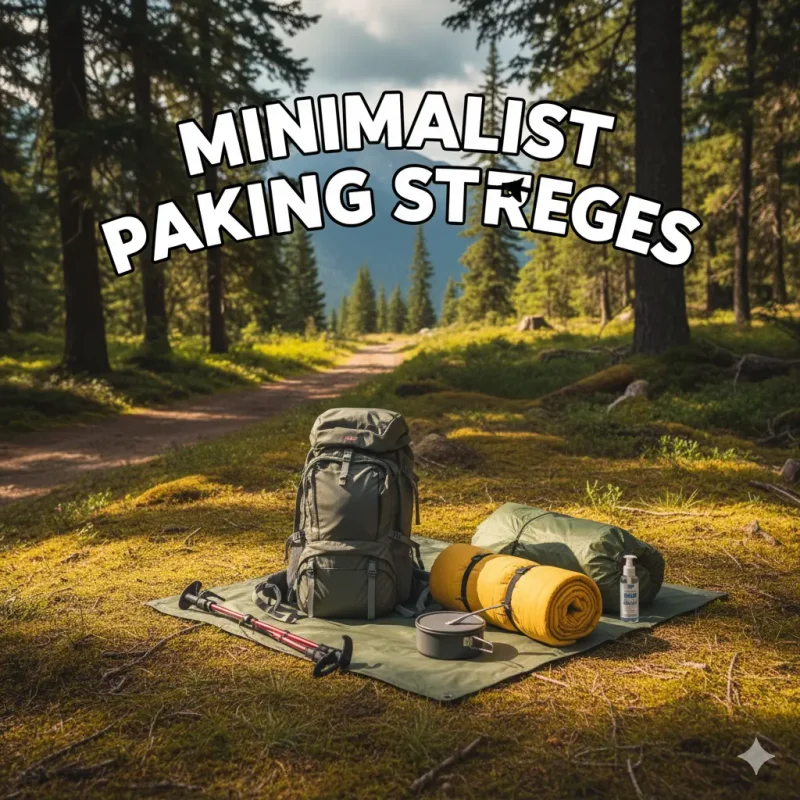
Though packing light is wise, you don’t want to miss the essentials. Through time, I came to concentrate on what I actually need and let go of unnecessary extras.
Consider the weather and length of your hike. Bring just the essentials for brief hikes. Layers and extra food should be added for longer travels, but keep all as light as feasible. Multipurpose equipment is a necessity.
Balance your bag’s weight to be comfortable. Keep items you seldom use farther inside and keep daily necessities accessible.
Minimalist packing entails selecting quality over quantity, hence you hike more lightly without losing out on what guarantees your safety.
Weatherproof and Safety Essentials
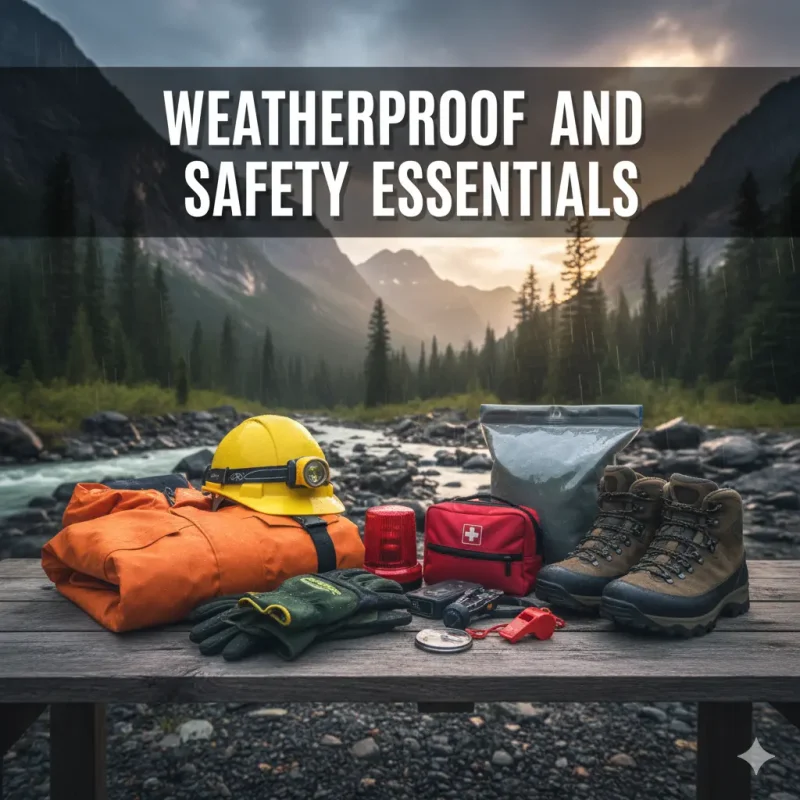
On the trail, weather might quickly alter. For my backpack, I invariably bring waterproof covers as well as quick-drying clothing just in case. Being dry lets you escape shivering and pain.
Safety equipment is also essential. I have a tiny first aid kit, navigation aids like a map or GPS, and a whistle. If you become harmed or lost, these assist.
Packing for rain or cold weather is wise even if the forecast seems to be clear. Unexpected storms have caught me; having the right equipment spared my journey.
Being ready for all circumstances helps you to be safe and confident regardless.
Planning Food and Hydration
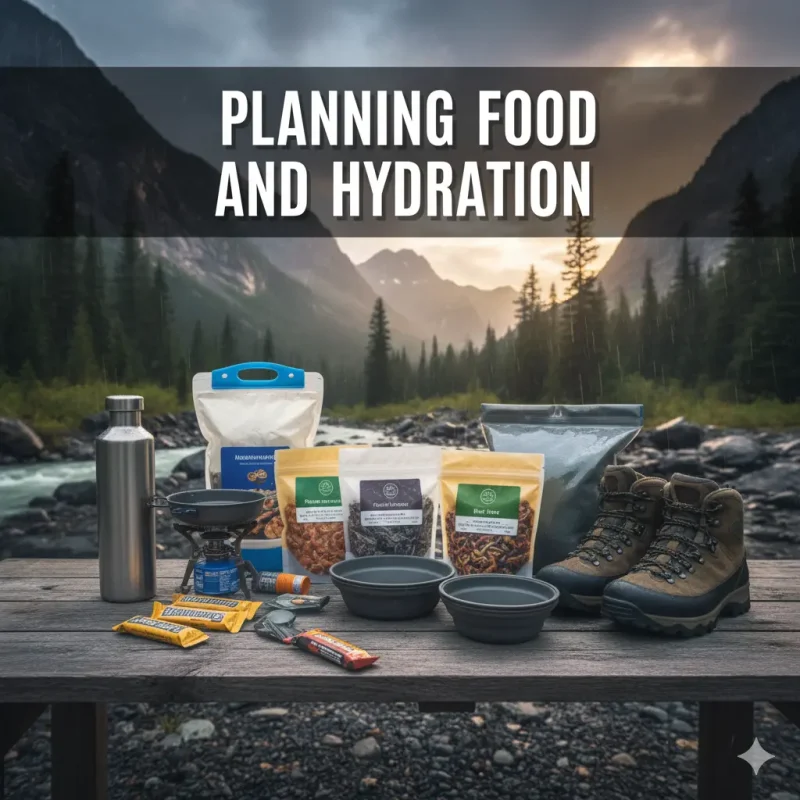
A happy trek depends mostly on excellent nourishment and water. I include light, high-energy snacks like nuts, dried fruit, and energy bars. They are simple to carry and keep me charged.
I hydrate with a water bladder with a hose so I can drink without pausing. If you are walking where water is difficult to find, bring extra water bottles.
Arranging your food in readily available places lets you eat and drink without opening everything. Maintaining your energy and pleasurable hike depends on remaining hydrated and nourished.
Comprehensive Hiking Packing Checklist and Pre-Trip Tips
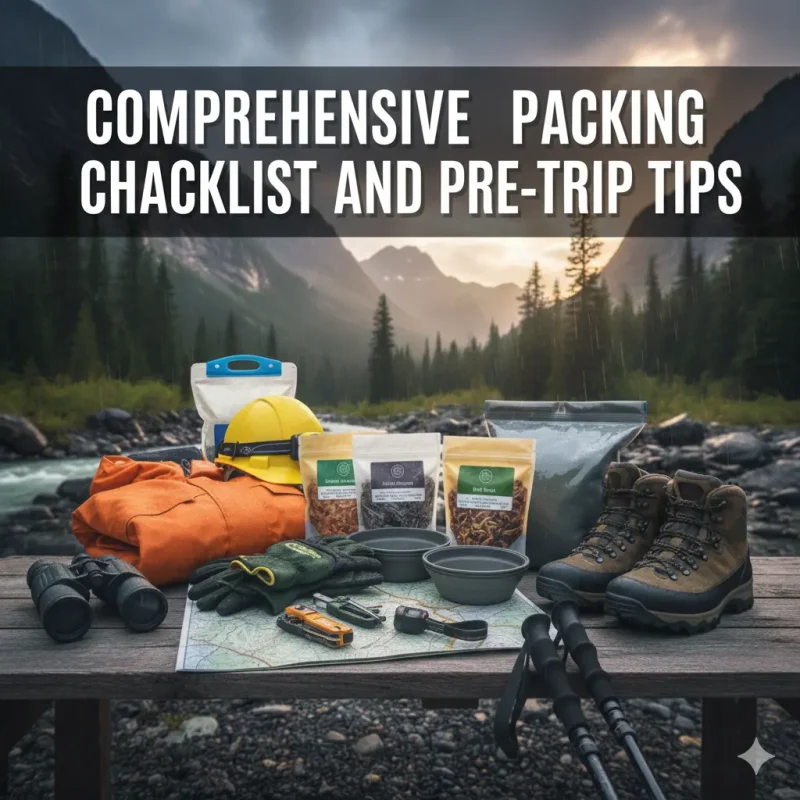
Before I head out on a hike, I always go through a packing checklist. It keeps me from forgetting something important.
Here’s a simple pre-hike checklist:
- Clothing (layered, weather-ready)
- Hiking travel gear (tent, sleeping bag, stove)
- Food & snacks
- Water bottles or hydration bladder
- First aid kit
- Navigation tools
- Rain gear
- Sun protection (hat, sunglasses, sunscreen)
One thing that helps a lot is testing your gear before the trip. I always check that my stove works and my shoes still feel good. A little check now saves a lot of trouble later.
Depending on your hike—day hike, weekend, or multi-day trek—you can adjust your list. This flexibility makes your hiking trip packing tips even more useful and personal.
I also did a final “backpack check” the night before. I lay everything out, pack it, and make sure it’s balanced and nothing’s missing.
This pre-trip routine is one of my best hiking trip packing tips, especially if you’re new to hiking or heading somewhere remote.
Organizing Your Backpack
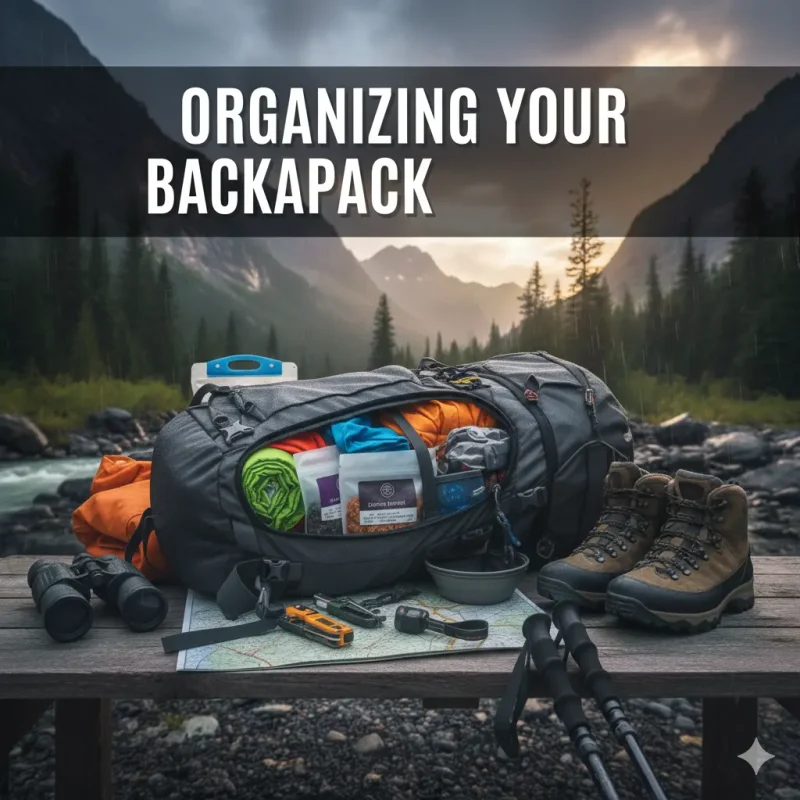
A messy backpack is a problem you feel every mile. That’s why packing it right is one of my top hiking trip packing tips.
Put heavy items like water or a tent close to your back and in the middle of your pack. This helps with balance and keeps the weight from pulling you backward. Lighter items go toward the top and outer pockets.
Essentials like snacks, a rain jacket, or a headlamp should be packed where you can grab them fast. I use side pockets or the top flap for these.
Use stuff sacks or small bags to group similar items. It makes packing easier and saves time when you’re on the trail.
Frequently Asked Questions
For a short hike, keep it simple. Here’s what I always bring:
- Water (at least 1 liter)
- Light snacks (trail mix, granola bars)
- Hat and sunscreen
- Lightweight rain jacket
- First aid kit (small one)
- Navigation (map or phone with GPS)
This covers the basics and keeps your bag light.
Longer hikes need more planning. I pack:
- Full set of layered clothing
- Tent or shelter
- Sleeping bag and pad
- Cooking gear and food
- Extra socks and base layers
- Water filter or purification tablets
- Emergency whistle and headlamp
Use packing cubes to organize everything so it’s easy to find. These are a huge help when you’re tired at camp.
Weather can change fast, especially in the mountains. I always check the forecast, then pack:
- Waterproof jacket
- Extra dry clothes in a ziplock
- A warm layer (like a fleece)
- Hat and gloves, even in summer (just in case)
I’ve had sunny mornings turn into freezing afternoons. Being ready for weather swings is one of the smartest hiking trip packing tips you can follow.
A good rule is:
- Day hike: under 10–15% of your body weight
- Multi-day: 20–25% max
If your bag feels heavy before you leave, it’ll feel twice as bad on the trail. Pack light, and only what you’ll use.
Yes. Phones can die or lose signal. I always carry a small printed map and compass as backup. They weigh almost nothing and can save your hike.
Use a bear canister or hang your food in a tree if required. Keep snacks sealed in odor-proof bags and don’t store food in your tent. It’s one of those hiking trip packing tips you might not think of—until a raccoon finds your trail mix.
