
Blog
Top 6 Camping Travel Essentials for a Safer, Easier Trip

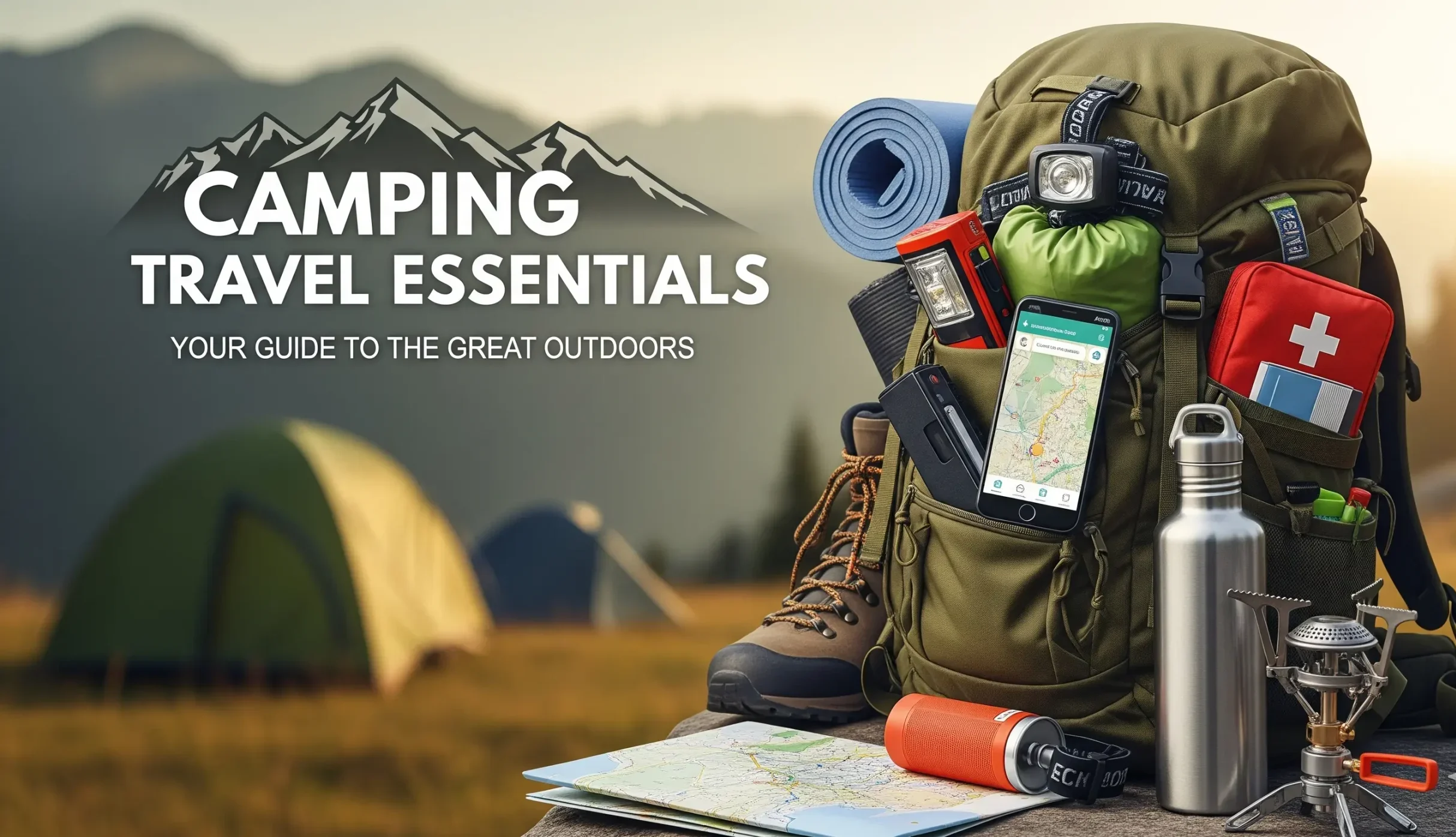
When you are in the wild, the little things count. Lose one important detail and your weekend of peaceful nights under the stars is turned into an irritating disappointment. This is why possessing the appropriate camping travel essentials is more than merely useful, it is the secret to survival, comfort and actually enjoying the journey.
Are you going into the woods on your first or second trip, or do you already have the outback bug and just need to create a good camping packing list to help in making plans and choosing what to pack and what not to pack and be visible to whatever nature throws your way this weekend. Out of the blue sky or a broken zipper, cold night and no blanket – the correct outdoor trip equipment is there to the rescue.
You can widely imagine it this way: good tools are your silent partner. It will never grumble, but will see that you are warm, dry, well-fed, and smiling in the camp fire. That is why it makes planning and packing the smart way so worth it, because when you are away, comfort and safety is not optional.
The Big 6: Camping Essentials That Make Travel Easie
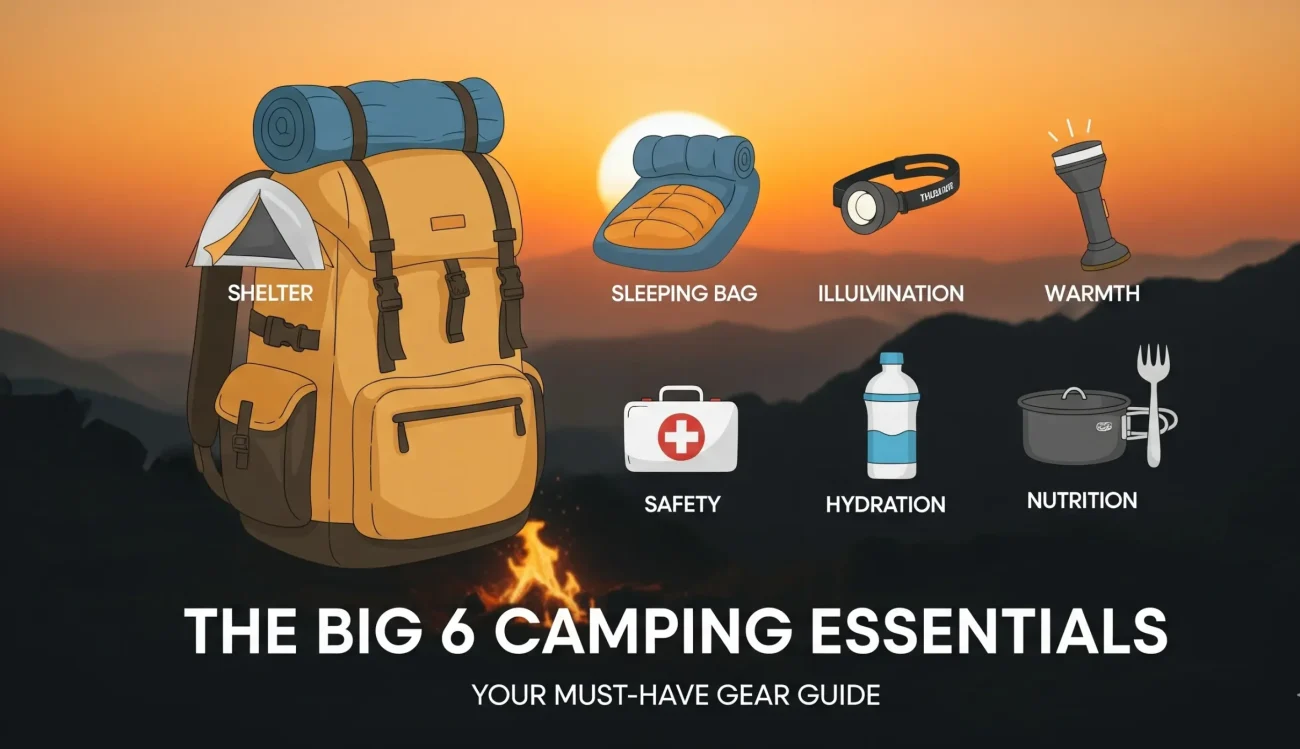
Let’s keep it simple: you don’t need to pack everything — just the right things. After years of camping trips, gear fails, and forgetful moments (like the time I left my sleeping bag in the garage… on a winter trip), I’ve learned that six core items make all the difference between a great time and a miserable one.
These are the “Big 6” — your must-haves for comfort, safety, and stress-free planning. Each one solves real outdoor challenges, saves you time, and keeps your focus where it should be: enjoying nature.
Here’s what we’ll cover:
- Shelter & Sleep Gear – Because a good night’s sleep is everything.
- Cooking Gear – Hot meals and coffee? Yes, please.
- Lighting & Power – So you’re not fumbling in the dark or with dead batteries.
- First Aid & Safety – From cuts to bug bites, you’ll be covered.
- Tools & Utility Gear – Fix it, cut it, hook it up — all in one bag.
- Clothing & Personal Care – Stay clean, dry, and ready for anything.
These aren’t just tips — they’re the backbone of any smart camping packing list. Think of them as your core camping travel essentials for any kind of outdoor trip gear setup, whether you’re heading to the mountains, the forest, or the beach.
Item #1: Shelter & Sleep Gear for a Good Night Outdoors

Coming back to a peaceful setup after a strenuous day of hiking, cooking or simply being in nature, laying down and having you sleep is the best thing ever. When you do not get enough sleep, the following day will be a challenge in itself, even a simple task like boiling water will be a burden when you are so sore and sleep-deprived.
That is why you need to choose your shelter and sleep equipment as the first priority.
You are going to need a tent that is capable of withstanding the weather at the very least keeping the bugs out. Stick to something light and sturdy, particularly when you are going to transport it long distances. Place a tarp or footprint beneath – this keeps your tent dry and also keeps the inside of your tent dry on rainy days.
When it comes to sleep, don’t settle. A decent sleeping bag matched to the season can mean the difference between comfort and cold misery. Pair it with a sleeping pad, air bed, or even a cot if you’ve got the space — they all give your body the support it needs off that hard, uneven ground.
And don’t forget a pillow. Seriously, a little neck support changes everything. I’ve used a bundled-up jacket in a pinch, but when I finally brought along a small inflatable pillow, I woke up without a sore neck — and in a much better mood.
If you’re short on room, look for compact or multi-use gear — like pads that roll into your backpack or air beds that come with a built-in pump. Sleep is not where you want to cut corners.
Item #2: Camp Kitchen and Cooking (Absolute Essentials)
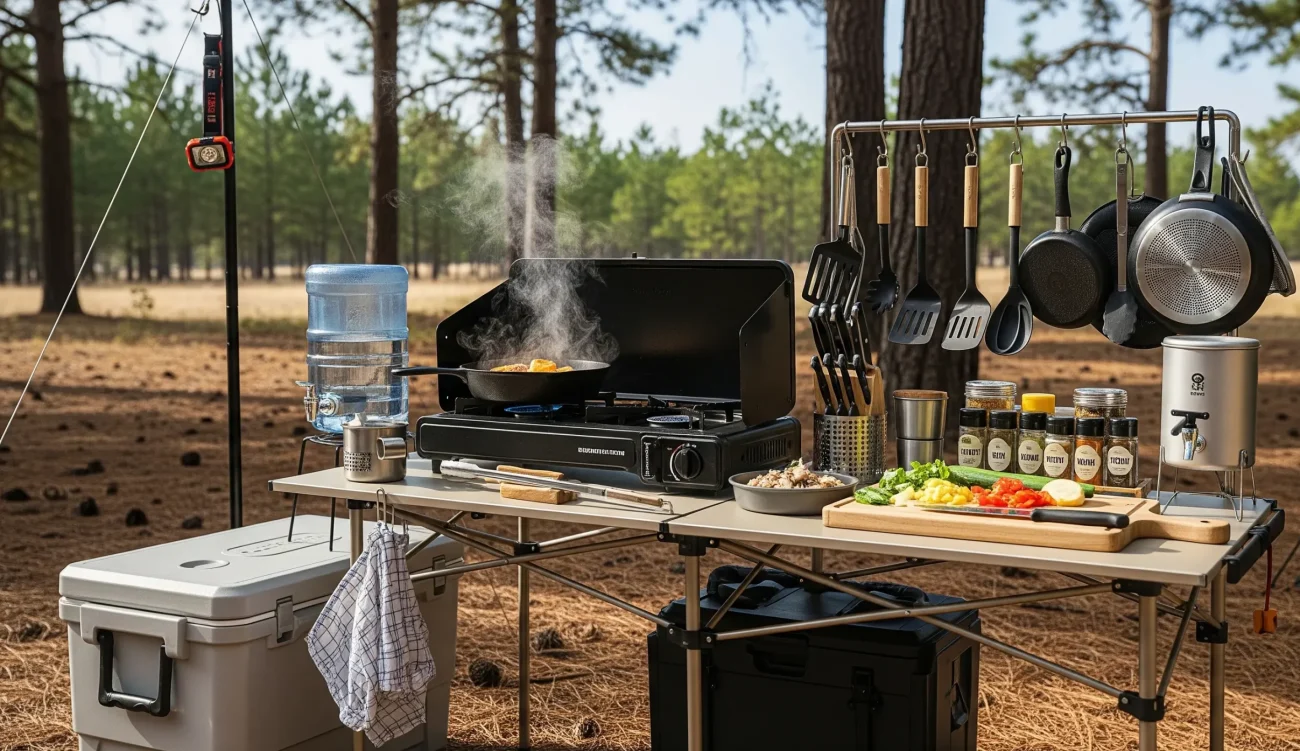
You don’t have to be a gourmet chef to eat well at camp, but you do need the basics to make meals fast, easy, and clean. A stove is the hero here — compact, reliable, and way better than trying to cook over a fire every time (especially if it’s raining or windy). Just remember to pack the right fuel.
You’ll want a few solid pieces of cookware — maybe a small pot, a pan, and something to stir with. A good knife goes a long way too, not just for food prep but general camp tasks. And yes, don’t forget the utensils — trying to eat chili with a plastic spoon that melts is not fun.
Carry a cooler when you want to keep something fresh or carry dried or canned goods that you won’t have to carry far. An appropriate water bottle is a filtered bottle that one can use to drink and cook with – particularly when you do not know much about water sources where you are heading.
And let’s talk about coffee. Bring a portable coffee maker or French press in case you have a morning cup. Nothing like drinking hot coffee by the fire as the sun comes up.
You will have to clean up after cooking. That will take a sponge, a little camp soap, and water. It does not last long, but it makes a difference when a clean camp helps the bugs off and the next meal is easy.
This is one of my tricks: I plan simple meals (such as pasta, rice bowls, or wraps) in advance and put ingredients in reusable bags. It requires less time and space and it does not let you forget essential ingredients. Nobody wants tacos without salsa.
Item #3: Lighting & Power to Navigate & Stay Connected
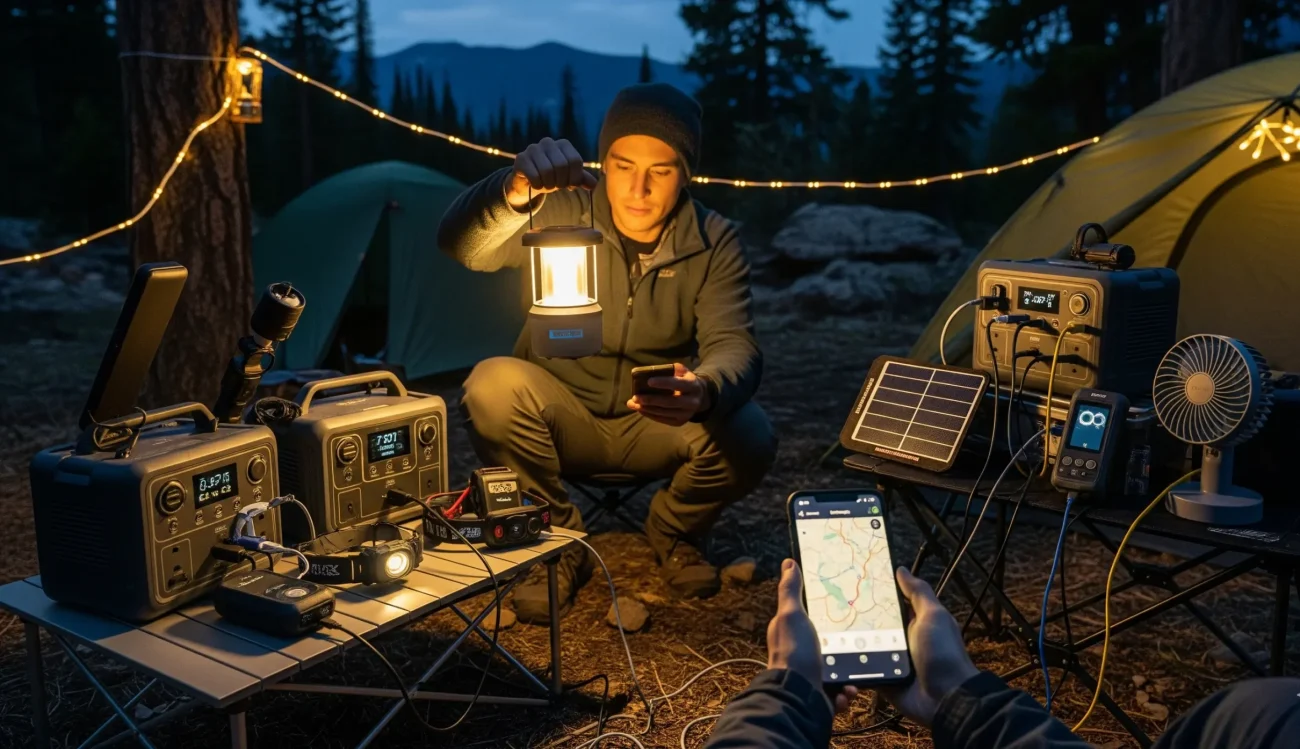
When the sun goes down, being able to see — and charge your stuff — becomes a whole new kind of important. I’ve learned this the hard way. Once, I forgot my headlamp and spent 30 minutes trying to cook dinner with my phone flashlight in my mouth. Never again.
For light, pack a headlamp first — hands-free and super useful for everything from setting up your tent to late-night bathroom trips. A lantern lights up your whole space for meals or card games, while a flashlight is a great backup. Don’t forget extra batteries, or your fancy gear won’t do much after day one.
Keeping your phone switched on is also important, particularly when you are using your phone to get directions or take pictures. Carry a portable power bank to charge something fast or buy a portable power station when planning a longer or group campout. A solar charger is a game-changer when you need to go off-grid, as you can just attach it to your backpack and go hiking.
Light and power are more than just convenience — they’re part of your camping travel essentials for safety, night navigation, and keeping connected when needed.
Item #4: First Aid & Emergency Safety Gear
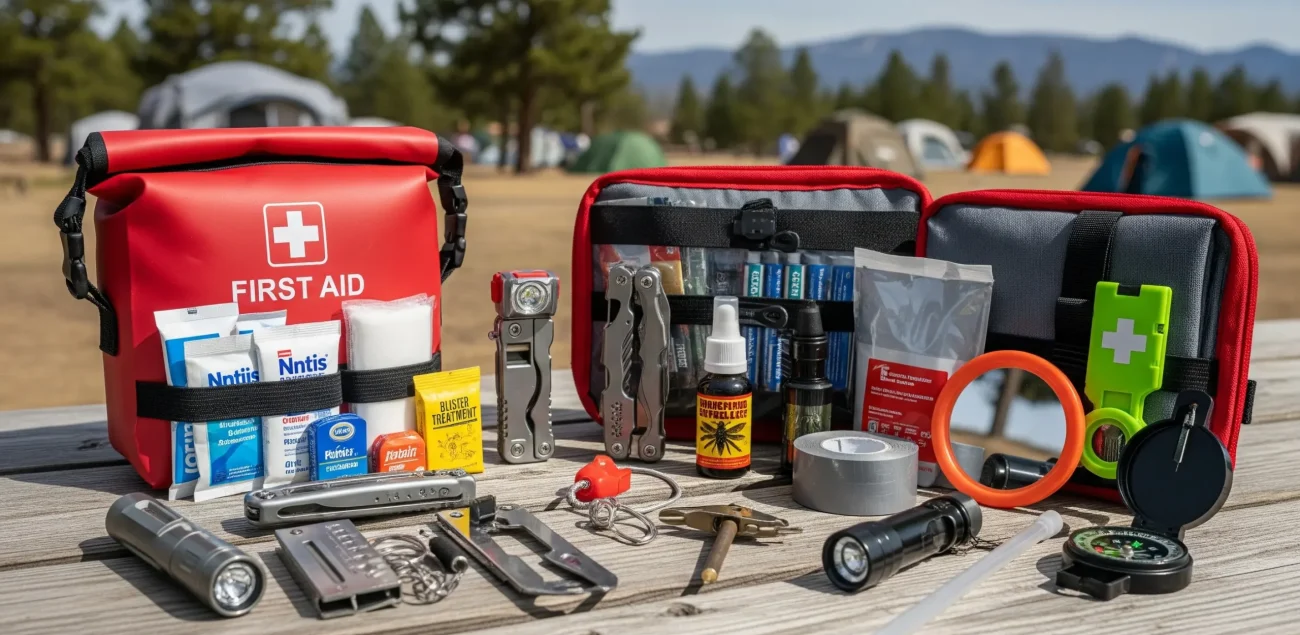
Things go wrong. You stumble, get a scrape on your knee, a bug has bitten you, or your hand has been burnt by a hot pan. A bare first aid kit can transform a minor issue into a problem that can be solved in five seconds – rather than ending your journey early.
Start with the basics: bandages and antiseptic wipes, painkillers and personal medicines that you cannot do without. Include an insect repellent (they will always notice you), and an emergency blanket– it fits into a tiny space and will be handy when it gets cold or you have a shock.
A signal mirror with a whistle has a ridiculous price tag, however, it is also clever insurance when you are in isolated locations. In another instance I was made to use a whistle to direct someone back to our camp when they lost their way in the woods–a whistle works wonders.
Make sure everything is stored in a waterproof pouch or zip bag so it doesn’t get ruined if it rains or drops in the river.
You won’t use this gear every trip — and hopefully never — but when you do need it, you’ll be thankful it’s packed. It’s one of the most overlooked camping travel essentials, especially for beginners.
Item #5: Multi-Use Tools & Utility Essentials
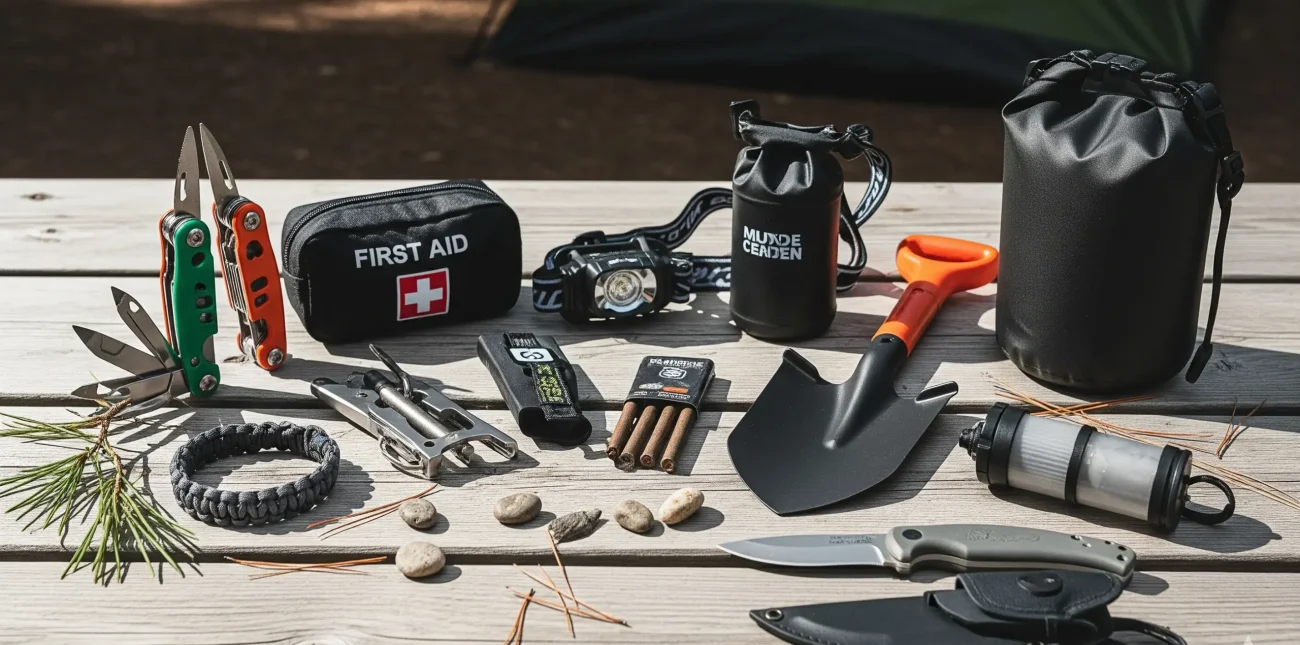
Let me tell you: nothing feels more satisfying than pulling out a multi-tool to fix a tent pole or open a can like a camping MacGyver. These little items may not seem flashy, but they solve more problems than you’d expect.
Start with a good knife — for cooking, repairs, or cutting rope. A solid multi-tool adds scissors, screwdrivers, pliers, and more in one item. Then there’s duct tape — I always wrap a few feet around my water bottle. It’s great for patching gear, sealing holes, or fixing broken poles.
A small trowel is useful for digging a fire pit or going to the bathroom in wild areas. Add suction hooks or clips to hang stuff inside your tent or from trees. Pack a tent repair kit just in case (broken zippers and ripped mesh are more common than you think), and always carry a bit of rope — you can tie down tarps, hang laundry, or even use it for first aid.
These aren’t “just in case” items. They’re smart, lightweight, and part of every serious camping travel essentials list.
Item #6: Weather-Ready Clothing & Personal Care
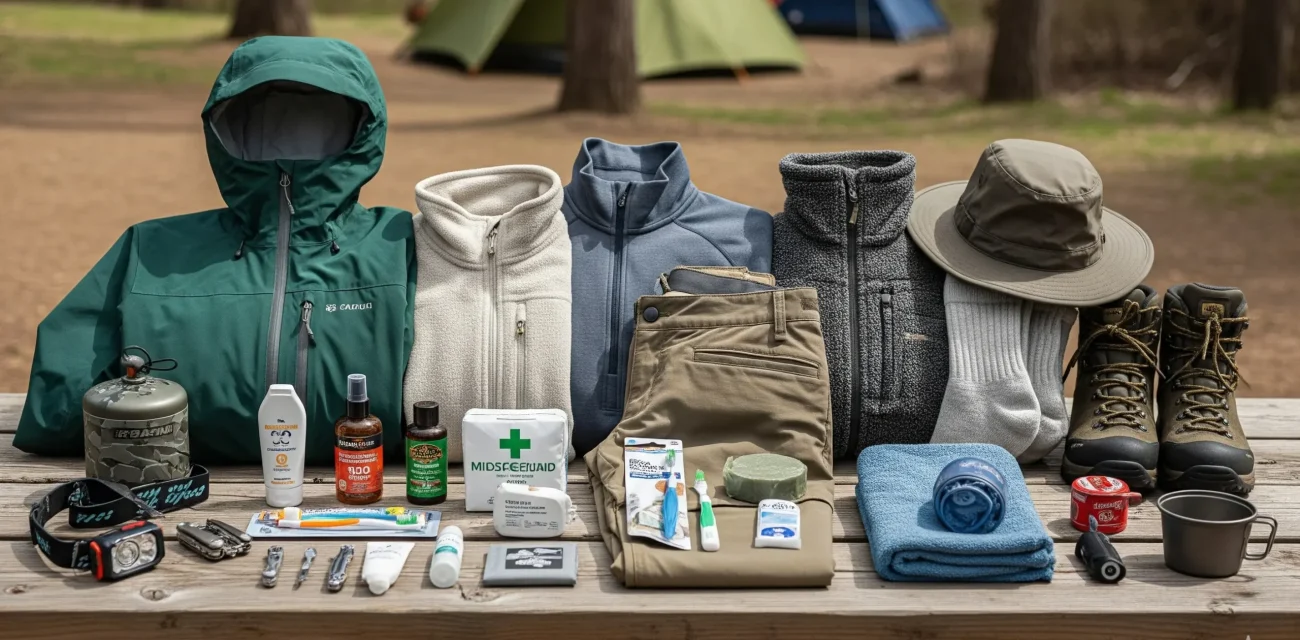
Mother Nature does not concern itself with what you intend to do. You might start out in the daytime sun and finish the night in a thunderstorm. That is why it is not only necessary to remain clean but also to remain warm, dry and prepared by packing the appropriate clothes, personal care packages.
Begin with moisture-wicking fabrics – these will prevent sweat on the skin and keep you at the right temperature. Put on a rain jacket when the weather looks nice. A falling rain can make you shiver. I carry more socks (dry feet are happy feet) and a pair of sandals to walk around camp.
Sunscreen and bug spray are non-negotiable. I once forgot the spray during a summer trip and came home looking like a dot-to-dot puzzle — not fun. Toss in a small towel, toilet paper, and a bit of biodegradable soap for washing up without hurting the environment.
This gear isn’t about looking good — it’s about feeling good, avoiding blisters, bites, burns, and staying comfortable for the whole trip. It’s the personal side of your camping travel essentials — and trust me, you’ll notice if you forget even one of these.
Conclusion
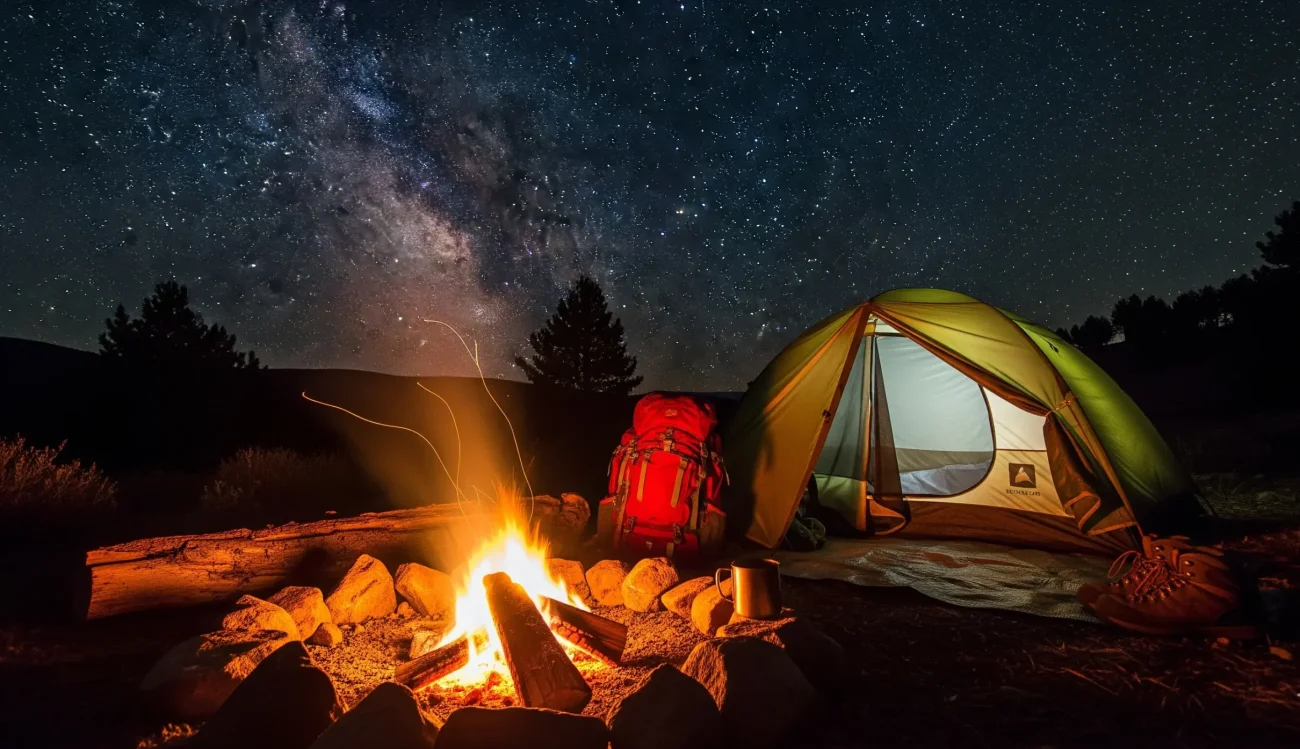
Camping is not that complex, all it takes is proper equipment and some planning. Once you put your attention on the Big 6 camping travel essentials, the entire experience becomes easier, safer, and significantly more entertaining.
Hooked up with appropriate shelter and sleeping arrangements, warm food at your fingertips, light when you demand it, first aid kit when there might be need, problem-solving tools right in your pocket, and clothing to leave you dry and clean–you can tackle nearly anything nature sends your way.
Ahead planning does not mean to overpack or be too careful. It is all about creating room to enjoy oneself, have fun and relax. Whenever I can find the time to prepare myself, the journey becomes more enjoyable and I spend less time cleaning up after problems and more time appreciating the place I am currently at.
As you gear up to your next adventure, work through your list of gear, check off your camping travel items and be confident before you go. The outdoors is not predictable — but with the right stuff you are always a step ahead.
